
The Significance of Barley Harvest
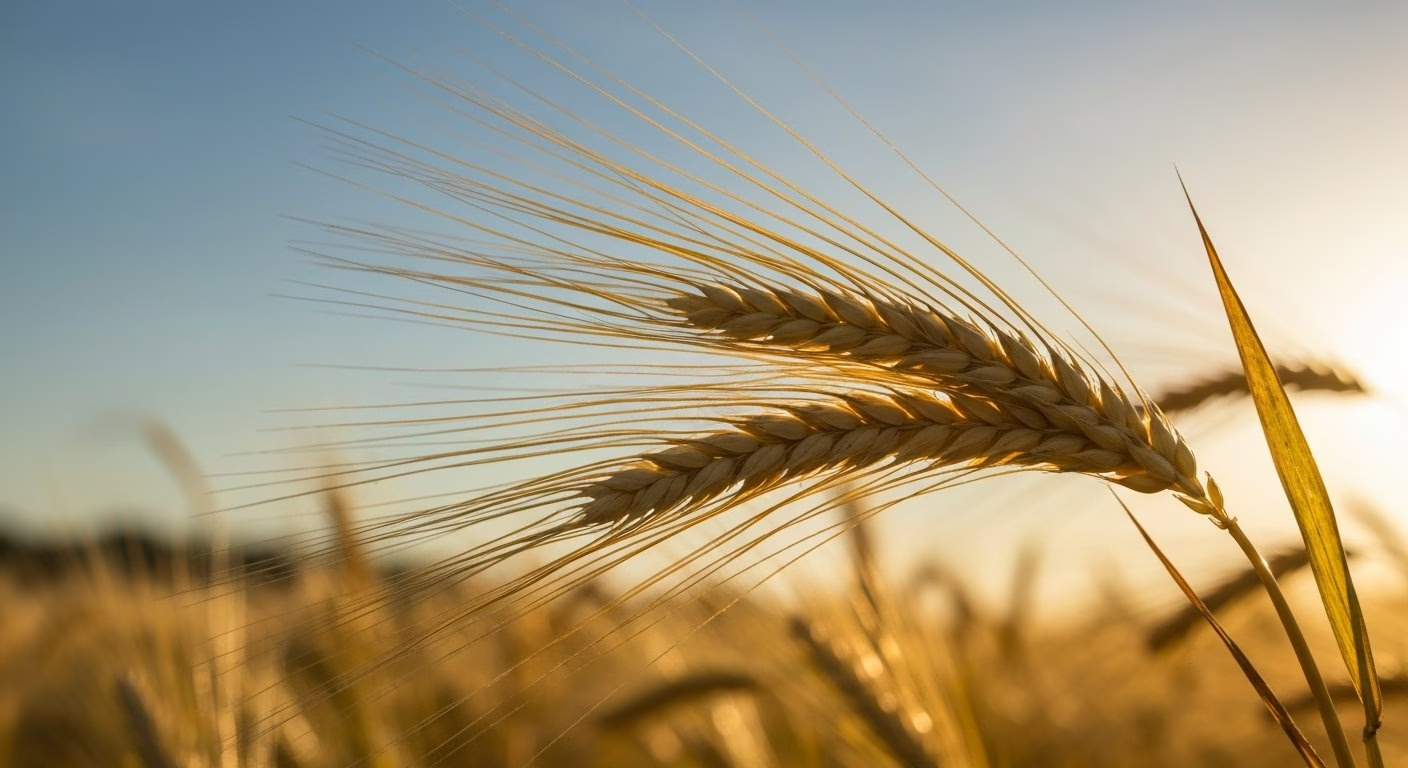
The golden sway of a barley field under the spring sun is more than just a beautiful landscape. It represents one of the most pivotal moments in human development, marking the transition from nomadic wandering to settled civilization.
The significance of barley harvest transcends mere agriculture. It weaves together threads of ancient history, deep spiritual symbolism, and the very foundations of global economics.
Understanding the Historical Roots of Barley Cultivation
To understand the weight of this harvest, we must look back over 10,000 years to the Fertile Crescent. Barley was not just a crop; it was the catalyst for the Neolithic Revolution.
Barley as One of the Earliest Domesticated Grains
Barley (Hordeum vulgare) was among the first “founder crops” domesticated by early humans. Its ability to grow in poor soil and resist drought made it a reliable choice for ancient farmers.
By selecting the best seeds year after year, early humans transformed wild grasses into the heavy-headed grain we recognize today. This shift allowed for the first permanent settlements and the growth of the human population.
The Role of Barley in the Foundations of Ancient Mesopotamia and Egypt
In ancient Mesopotamia, barley was so valuable it served as a primary form of currency. Workers were often paid in measures of barley, which could be ground into flour or fermented into ale.
Ancient Egyptians viewed barley as a gift from the gods, specifically associated with Osiris. It was the staple grain for the masses, providing the caloric foundation for the builders of the pyramids.
Archaeological Evidence of Early Harvest Techniques
Archaeologists have uncovered flint-edged sickles and stone grinding slabs that date back millennia. These tools tell a story of labor-intensive harvesting that required the cooperation of entire communities.
Storage pits and granaries found in ancient ruins highlight the importance of surplus. Success in the barley harvest meant the difference between a thriving city-state and a starving one.
The Biblical and Spiritual Significance of Barley Harvest
In many religious traditions, the barley harvest is a time of profound spiritual reflection. It marks the beginning of the agricultural year’s bounty and serves as a metaphor for divine provision.
The Connection Between Barley and the Festival of Firstfruits
In the Hebrew tradition, the barley harvest coincides with the Festival of Firstfruits. This was a time when the first sheaf (the Omer) of the harvest was brought to the Temple as an offering.
This act acknowledged that the land and its produce belonged to the Creator. It was a ceremony of gratitude that had to occur before any of the new crop could be eaten by the people.
Lessons of Redemption and Provision in the Book of Ruth
The Book of Ruth is perhaps the most famous literary connection to the barley harvest. The story begins as Ruth and Naomi return to Bethlehem exactly at the start of the harvest.
The “gleaning” in the barley fields was not just a survival tactic for the poor; it was the setting for a story of loyalty and redemption. The harvest provided the backdrop for Ruth to meet Boaz, changing the course of biblical history.
Symbolic Representations of New Beginnings and Resurrection
Because barley is the first grain to ripen after the winter, it is a powerful symbol of life emerging from death. In various theological contexts, it represents resurrection and the promise of new life.
The transition from the “dead” earth of winter to the “golden” fields of spring serves as a perennial reminder of hope. It suggests that even after the harshest seasons, a time of reaping will come.
The Link Between the Barley Harvest and the Counting of the Omer
The period between the barley harvest and the wheat harvest is known as the Counting of the Omer. This 49-day period bridges the gap between physical liberation and spiritual revelation.
It is a time of preparation and anticipation. The physical growth of the crops in the field mirrors the internal growth expected of the individual during this season.
The Agricultural Timing and Cycle of the Barley Harvest
The timing of the barley harvest is a masterclass in nature’s precision. It serves as the “early bird” of the cereal crops, setting the stage for the rest of the year.
Distinguishing the Early Barley Harvest from the Later Wheat Harvest
Barley typically matures weeks before wheat. This staggered ripening was essential for ancient farmers, as it spread out the labor-intensive work of harvesting.
If both crops ripened at once, much of the grain would be lost to birds or rot before it could be gathered. Barley’s early arrival provided immediate food security while the wheat continued to grow.
Climatic Conditions Necessary for a Successful Spring Yield
Barley is a hardy crop, but it requires specific conditions to thrive. A cool, moist spring followed by a dry ripening period is ideal for producing high-quality grain.
The “Abib” stage—when the grain is tender but nearly ripe—is a critical window. Farmers must monitor the weather closely, as a late frost or heavy rain can ruin the entire season’s work.
Traditional vs. Modern Methods of Reaping and Threshing
Historically, harvesting involved hand-cutting stalks with sickles and threshing them on stone floors using oxen. This was a communal event filled with song and ritual.
Today, massive combine harvesters can clear hundreds of acres in a single day. While the efficiency has increased, the fundamental goal remains the same: separating the precious seed from the chaff.
Economic and Dietary Significance of Barley Harvest Through the Ages
Barley has fed more people throughout history than almost any other grain. Its versatility makes it a cornerstone of both the kitchen and the global marketplace.
Barley as a Vital Staple for Ancient Working Classes
For centuries, barley was known as “the bread of the poor.” While wheat was reserved for the wealthy, barley provided the fiber and protein needed by laborers and soldiers.
It was commonly eaten as porridge, flatbreads, or added to stews. Its density and slow-burning energy made it the perfect fuel for a pre-industrial world.
The Evolution of Barley in the Brewing and Malting Industries
Perhaps the most famous use of barley is in the production of beer. The malting process transforms barley starches into sugars, which are then fermented.
The barley harvest is the lifeblood of the brewing industry. From ancient Sumerian ales to modern craft IPAs, the quality of the harvest dictates the quality of the beverage.
The Importance of Barley in Global Trade and Commodity Markets
Today, barley is a major global commodity traded on international exchanges. Countries like Russia, Canada, France, and Australia are leading producers that feed the world.
Fluctuations in the barley harvest can impact everything from the price of beef to the cost of a pint of beer. It remains a vital indicator of global agricultural health.
Its Role as a Resilient Crop for Food Security and Livestock Feed
A large percentage of the global barley harvest is used for animal feed. Its high nutritional content makes it ideal for raising healthy livestock.
Furthermore, because barley can grow in marginal lands where wheat fails, it is a “safety net” crop. In the face of global food shortages, barley remains a reliable source of sustenance.
Cultural and Ritualistic Traditions Surrounding the Harvest
The harvest is rarely just about the food; it is about the celebration of life. Across the globe, various cultures have developed rich traditions to mark the reaping of barley.
Folklore and Seasonal Festivals Celebrating the First Reaping
In Northern Europe, the first harvest was often celebrated with the “Harvest Home” or Lammas. While often associated with bread in general, the early barley was the star of the first feasts.
Folklore often spoke of “John Barleycorn,” a personification of the grain who must endure the cycle of growth, death, and rebirth. These stories helped people process the mystery of the agricultural cycle.
The Symbolic Use of Barley in Marriage and Fertility Rites
In some cultures, barley is thrown at weddings to symbolize fertility and abundance. Its rapid growth and many seeds make it a natural emblem of prosperity.
Ancient Greeks used barley meal in various sacrificial rites. It was seen as a purifying substance that connected the human realm with the divine.
Regional Variations in Harvest Celebrations Across Europe and the Middle East
In the Middle East, “Moussem” festivals often coincide with the harvest, featuring horse racing and communal meals. It is a time for tribes and families to reunite and share the bounty.
In rural Europe, the “last sheaf” of the harvest was often kept as a charm for the following year. These traditions highlight the deep respect humans have always held for the land.
Modern Perspectives on The Significance of Barley Harvest
As we move into a more technologically advanced era, the barley harvest continues to adapt. It is finding new life in the worlds of science and sustainability.
Contemporary Uses in Health Food and Nutritional Science
Modern nutritionists have rediscovered barley as a “superfood.” It is packed with beta-glucans, a type of fiber known to lower cholesterol and improve heart health.
From pearled barley in salads to barley grass powders in smoothies, the grain is making a comeback in health-conscious kitchens. It is no longer just “poor man’s bread” but a premium nutritional choice.
The Impact of Climate Change on Traditional Harvest Timelines
Climate change is shifting the traditional windows for the barley harvest. Warmer winters and unpredictable springs are forcing farmers to develop new planting strategies.
Researchers are working to breed “climate-ready” barley varieties. These plants are designed to withstand extreme heat and changing rainfall patterns to ensure future harvests.
Sustainability and the Future of Barley in Regenerative Agriculture
Barley plays a crucial role in regenerative farming practices. It is often used as a cover crop to prevent soil erosion and improve soil structure.
By integrating barley into crop rotations, farmers can reduce their reliance on chemical fertilizers. This makes the barley harvest a key component of a more sustainable food system.
Conclusion: The Enduring Legacy of the Barley Harvest
The significance of the barley harvest is a story of survival, faith, and innovation. It is a golden thread that connects our ancient ancestors to our modern dinner tables.
Summarizing the Interplay Between Agriculture, Faith, and Economics
We have seen how a single grain can influence the rise of empires, the rituals of religion, and the flow of global trade. The barley harvest is a multifaceted event that touches every part of human life.
It reminds us that our complex modern world still rests on the simple foundation of a successful harvest. Without the bounty of the fields, the structures of civilization could not stand.
Why the Barley Harvest Remains a Symbol of Human Ingenuity and Nature’s Bounty
Despite our technological advances, we remain dependent on the cycle of the seasons. The barley harvest is a testament to human ingenuity in taming the wild and nature’s generosity in providing.
As we look to the future, the humble barley grain will continue to be a symbol of resilience. It is a reminder that with care, the earth will always provide a new beginning.
Are you looking to deepen your connection with the land and its ancient traditions? Join our community today for more insights into sustainable living and historical wisdom!
Frequently Asked Questions
Why was barley significant in ancient civilizations like Mesopotamia and Egypt?
In ancient Mesopotamia, barley was so valuable that it served as a primary form of currency for paying workers. In Egypt, it was a staple grain that provided the caloric foundation for the builders of the pyramids and was spiritually associated with the god Osiris.
How does the timing of the barley harvest compare to that of wheat?
Barley is considered the ‘early bird’ of cereal crops, typically maturing several weeks before wheat. This staggered ripening allowed ancient farmers to spread out their labor and ensured immediate food security while the wheat continued to grow.
What is the connection between the barley harvest and the Book of Ruth?
The Book of Ruth is set during the barley harvest, beginning with Ruth and Naomi’s return to Bethlehem at the start of the season. The harvest provides the backdrop for the story’s themes of loyalty and redemption, specifically through the practice of gleaning in the fields.
What modern health and agricultural benefits does barley provide?
Nutritionally, barley is considered a superfood rich in beta-glucans, which help lower cholesterol. In agriculture, it is used as a cover crop in regenerative farming to prevent soil erosion and improve soil structure, reducing the need for chemical fertilizers.