MEETINGS & EVENTS
Sunday Worship
English: 1 PM
Korean: 3:30 PM 
Sunday School: 2:15 PM

Weekly Bible Study
Tue: 8 PM
Fri: 8 PM

Night Watch Prayer
Usually last Fri of the month

Seminar on Dating and Marriage
Pre-marital Seminar & Counseling Sessions
5-8 private sessions

Special Program
Campus Ministry
Juilliard, NYU, New School & other locations
Mission Trip
Arts and Music
MCAF: Manhattan Cornerstone Artists’ Fellowship

NY Phil Concerts in the Parks at Central Park
Conert, Museum, Art Fair, Studio Visit
EVENTS & SEASONS
Past Events
2025
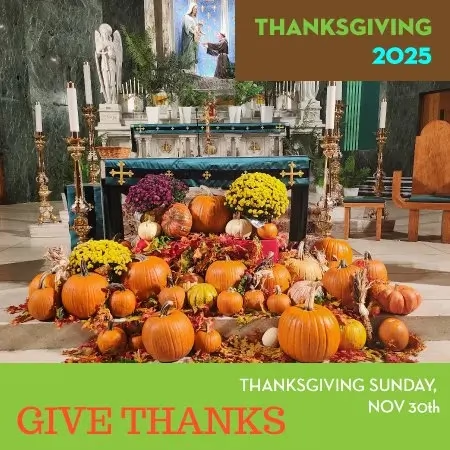
Join Us for Thanksgiving Sunday – December 1, 2024
Celebrate Thanksgiving with us in a spirit of gratitude and thanksgiving! Just as the Israelites brought their choicest, first-ripened fruits to God in acknowledgment of His goodness and provision, we invite you to join us in expressing heartfelt thanks for all the blessings in your life. This is a time to reflect on God’s faithfulness and celebrate the harvest He has provided. Come worship with a grateful heart and share in the joy of giving thanks together as a community. Let’s honor God by acknowledging that all good things come from Him!
Sukkot | Feast of Tabernacles: Oct 6 to 13
The Jewish Festival of Booths, Sukkot, spans eight days from October 6 through October 13. One of the three pilgrimage festivals mentioned in the Hebrew Bible, Sukkot combines thanksgiving for the autumn harvest with remembrance of Israel’s wilderness journey.
The festival’s name derives from the temporary shelters called sukkah that families construct and inhabit during the celebration. These booths commemorate God’s protection of the Israelites during their 40-year desert wandering after the Exodus from Egypt, as commanded in Leviticus 23:33-44.
Sukkot also serves as a harvest festival, celebrating the gathering of crops and God’s provision. The celebration includes the ritual of the “Four Species” – palm, willow, myrtle branches, and citron fruit – which are waved together in prayer and thanksgiving.
Following the solemnity of Yom Kippur, Sukkot brings joy and celebration to Jewish communities. Modern Jews use this time to connect with nature, community, and tradition while dwelling in temporary shelters that remind them of life’s fragility and God’s eternal protection.
Rosh Hashanah: The Jewish New Year Begins September 22
The Jewish New Year, Rosh Hashanah, begins at sundown on September 22 and continues through September 24. Meaning “head of the year” in Hebrew, this holy day marks the beginning of the Jewish year 5786 and initiates a period of spiritual reflection.
Rooted in the biblical Feast of Trumpets found in Leviticus 23:23-25, Rosh Hashanah centers around the blowing of the shofar (ram’s horn). Jewish tradition holds this as the day God created Adam and Eve, earning it the title “birthday of the world.”
This festival combines celebration with introspection. Jews worldwide use this time to reflect on the past year, seek forgiveness, and make commitments for spiritual growth. Traditional foods include apples dipped in honey for a sweet new year and round challah bread symbolizing the cycle of life.
Rosh Hashanah begins the “Ten Days of Awe” culminating in Yom Kippur (Day of Atonement). For 15 million Jews globally, this represents not merely a calendar change but the start of a sacred journey toward spiritual renewal and divine judgment.
Sukkot: The Festival of Booths Celebrates Harvest and Heritage
The Jewish Festival of Booths, Sukkot, spans eight days from October 6 through October 13. One of the three pilgrimage festivals mentioned in the Hebrew Bible, Sukkot combines thanksgiving for the autumn harvest with remembrance of Israel’s wilderness journey.
The festival’s name derives from the temporary shelters called sukkah that families construct and inhabit during the celebration. These booths commemorate God’s protection of the Israelites during their 40-year desert wandering after the Exodus from Egypt, as commanded in Leviticus 23:33-44.
Sukkot also serves as a harvest festival, celebrating the gathering of crops and God’s provision. The celebration includes the ritual of the “Four Species” – palm, willow, myrtle branches, and citron fruit – which are waved together in prayer and thanksgiving.
Following the solemnity of Yom Kippur, Sukkot brings joy and celebration to Jewish communities. Modern Jews use this time to connect with nature, community, and tradition while dwelling in temporary shelters that remind them of life’s fragility and God’s eternal protection.
Shemini Atzeret: The Eighth Day Assembly Concludes Festival Season
Shemini Atzeret, observed from October 13-14 at sundown, marks a distinct holy day following Sukkot’s seven-day celebration. The Hebrew name meaning “eighth day assembly” represents an intimate gathering between God and the Jewish people after the festival season.
While connected to Sukkot, Shemini Atzeret stands as an independent festival with unique significance. Jews no longer dwell in the sukkah during this day, symbolizing a transition from the temporary shelters to a more permanent spiritual relationship with the Divine.
Traditional prayers for rain begin on Shemini Atzeret, as this coincides with the start of Israel’s rainy season. The community petitions God for the precipitation essential to agricultural success in the coming year, reflecting the deep connection between spiritual observance and practical needs.
This concluding festival emphasizes the protective relationship between God and Israel. After weeks of celebration and atonement, Shemini Atzeret offers a final moment of sacred assembly before returning to ordinary time, representing the culmination of the autumn holy day cycle.
Simchat Torah: Dancing with the Torah in Joyous Celebration
Simchat Torah, celebrated from October 14-15 at sundown, brings the annual cycle of Torah reading to a joyous conclusion. Meaning “Rejoicing with the Torah,” this festival celebrates completing the entire Five Books of Moses and immediately beginning the cycle anew.
The celebration centers on hakafot, seven ceremonial processions around the synagogue while carrying Torah scrolls. Community members dance and sing with the sacred texts, transforming the synagogue into a place of festive celebration and ending the High Holy Day season with pure joy.
Fall Retreat: Sep 26 to 27
We are hosting our fall retreat during this special season when the Jewish New Year (Rosh Hashanah) opens a time of reflection and repentance, and Sukkot celebrates God’s provision and protection through temporary dwellings. This retreat will be more than just a break from our daily routines—it will be a precious opportunity to renew our relationship with God and deepen the strong bonds within our community. Among the crisp autumn breezes and beautiful fall foliage, we will look back on the year with hearts of gratitude and repentance, remember together God’s faithful care, and make new commitments for the path ahead. We hope you will join us for this warm time of fellowship as we embrace the meaning of these holy seasons and encourage and comfort one another.
At Sundown on Sunday, June 1
Pentecost (from the Greek word for “fiftieth”) occurs 50 days after Easter Sunday. According to Acts 2, this was when the Holy Spirit descended upon the apostles and other followers of Jesus while they were in Jerusalem celebrating Shavuot.
Shavuot and Pentecost 2025: The Upcoming Celebrations
Shavuot and Pentecost are deeply connected festivals occurring in late spring, with Shavuot being the Jewish holiday and Pentecost its Christian counterpart. In 2025, Shavuot will begin at sundown on June 1 and end at nightfall on June 3, while Christians will celebrate Pentecost on June 8.
Shavuot, meaning “weeks” in Hebrew, marks the completion of the seven-week (49-day) counting period between Passover and Shavuot. The holiday has dual significance:
Agricultural celebration: Originally a harvest festival celebrating the first fruits of the summer wheat crop in ancient Israel.
Spiritual commemoration: Celebrates the giving of the Torah at Mount Sinai, marking the covenant between God and the Jewish people.
Passover (Pesach):
Begins Apr 12, 2025 at sundown; ends at nightfall on Apr 20, 2025
It commemorates the Israelites’ Exodus from Egypt, and their transition from slavery to freedom. The main ritual of Passover is the seder, which occurs on the first two night (in Israel just the first night) of the holiday — a festive meal that involves the re-telling of the Exodus through stories and song and the consumption of ritual foods, including matzah and maror (bitter herbs).
Easter Love Banquet 2025
Join us for our special Easter Love Banquet, Sunday, April 20, a cherished Easter celebration where we gather to honor Jesus’ resurrection with our church family and guests. Following our Easter service, we invite you and your loved ones for a festive meal and warm fellowship.
Celebrating Lent 2025
Lent is a 40-day period in the Christian calendar leading up to Easter, traditionally observed as a time of reflection, repentance, and spiritual preparation. During this season, many believers choose to fast from certain foods or activities as a way to focus on their faith and draw closer to God.
Year 2025
Blessed Happy New Year!
I Am Doing a New Thing
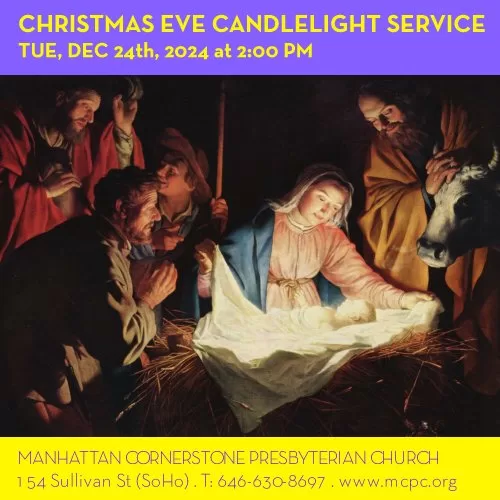
Christmas Eve Service: Tue, Dec 24, 2024 at 2 PM
2024
Thanksgiving Sunday: Dec 1

Is 60:19 The sun will no more be your light by day, nor will the brightness of the moon shine on you, for the Lord will be your everlasting light, and your God will be your glory.
Research & Advocacy: Nov 14
Unveiling the Connections Between Ancient Korea and Native America: A US Northeast Focus
The Korea Society is pleased to present Unveiling the Connections Between Ancient Korea and Native America: A US Northeast Focus with Dr. Son Sungngtae, Pai Chai University. Professor Son specializes in the field of historical linguistics focused on migration and cultural connections between Korea and the Americas. Using an innovative approach to examining the historical connections between Korean and Indigenous American cultures, he has identified significant structural similarities between American ancient languages and Korean as well as linguistic and cultural evidence of Korean migration to the Americas. Rev. Joseph Pang, Moccasin Institute, will moderate.
Read more