BAPTISM AT MADISON CHURCH
BAPTISM: The Divine Grafting
Grace moves first. Baptism is the Church’s radiant sign that God claims, gathers, and grafts us into the life of Christ.
SACRAMENTS · THEOLOGY · COVENANT
Three reflections on prevenient grace, the covenant household, and the God who always makes the first move.
ESSAY 01 · THE DIVINE GRAFTING
If you spend enough time walking the rain-slicked pavement of the Upper East Side or navigating the calculated minimalism of a Chelsea gallery, you begin to notice a recurring exhaustion. It is the fatigue of a culture that has successfully placed the burden of identity entirely upon the individual. We are told, from the moment we are old enough to scroll, that we are the architects of our own souls, the curators of our own brand, and the final arbiters of our own belonging. We shop for identities like we shop for over-priced espresso—searching for the right “vibe” that signals to the world who we have decided to be.
This spirit of the age has, predictably, crept into the narthex. We see it most clearly in the way many modern believers approach the sacraments, particularly baptism. For many, baptism has been reduced to a sort of religious graduation ceremony, a public “unboxing” of one’s personal faith. It is viewed as a decoration, an aesthetic choice made by a sovereign consumer to signal their commitment. Consequently, infant baptism is dismissed as a dusty artifact of a bygone era, a superstitious ritual that lacks the “authenticity” of a conscious, adult choice. We want a God who waits for our permission. We want a grace that respects our autonomy.
But the gospel is not a lifestyle brand, and the church is not a grocery store. When we reduce baptism to a mere human confession, we miss the terrifying and beautiful reality of what is actually happening. We are not just making a choice; we are being claimed. And that claim often begins long before we have the vocabulary to acknowledge it.
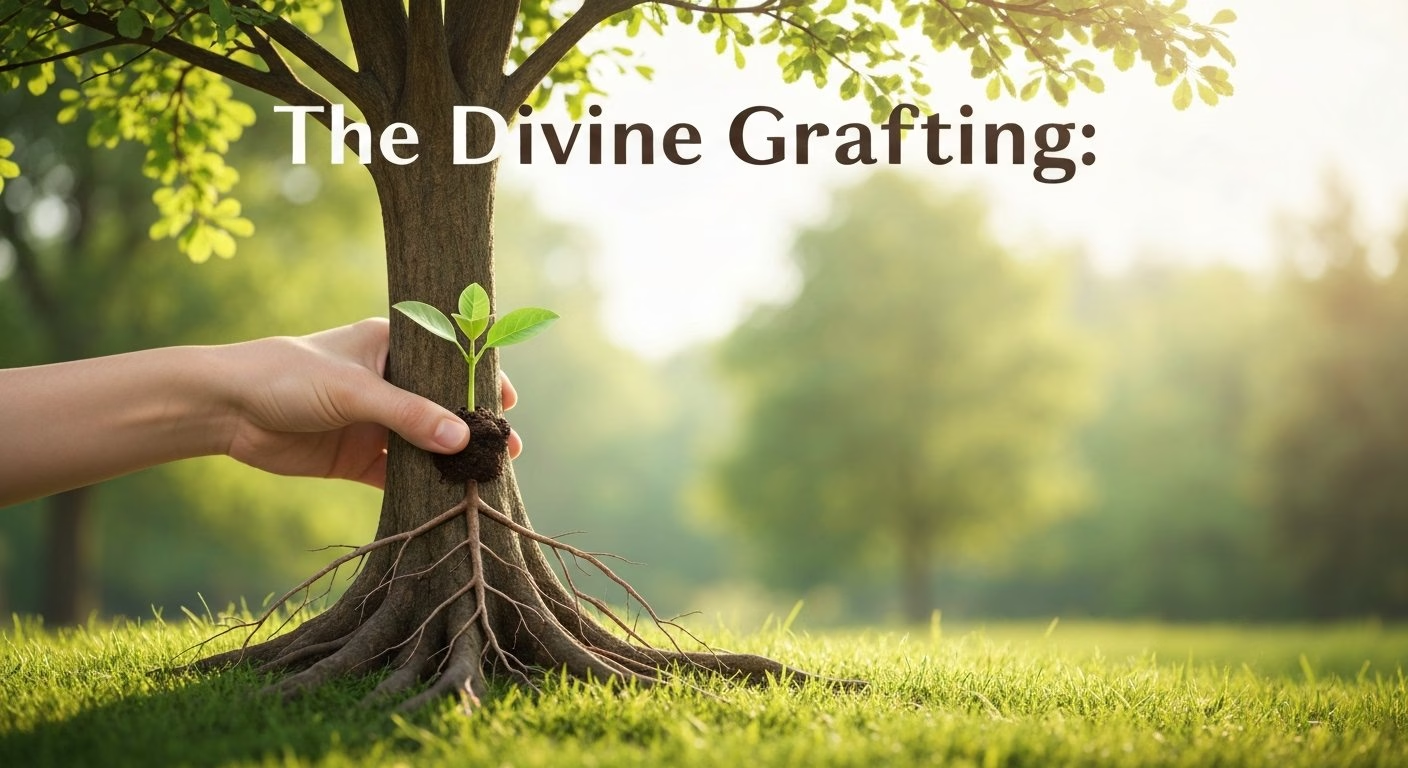
The central grievance against infant baptism usually centers on the child’s lack of awareness. “How can they believe?” the skeptic asks. “How can they choose?” This objection, while seemingly logical, betrays a deeply modern—and deeply flawed—understanding of grace. It assumes that God’s activity is limited by our comprehension. It suggests that the Holy Spirit is standing outside the nursery, waiting for the child to reach a certain cognitive milestone before He is allowed to work.
At the heart of our tradition is the doctrine of prevenient grace—the grace that comes before. This is the grace that finds us when we are dead in our trespasses, the grace that seeks us out while we are still hiding in the shadows of our own making. If salvation were dependent on the perfection of our “confession” or the depth of our “understanding,” none of us would be saved. We are all, in a spiritual sense, infants, babbling incoherently before a God whose thoughts are higher than our own.
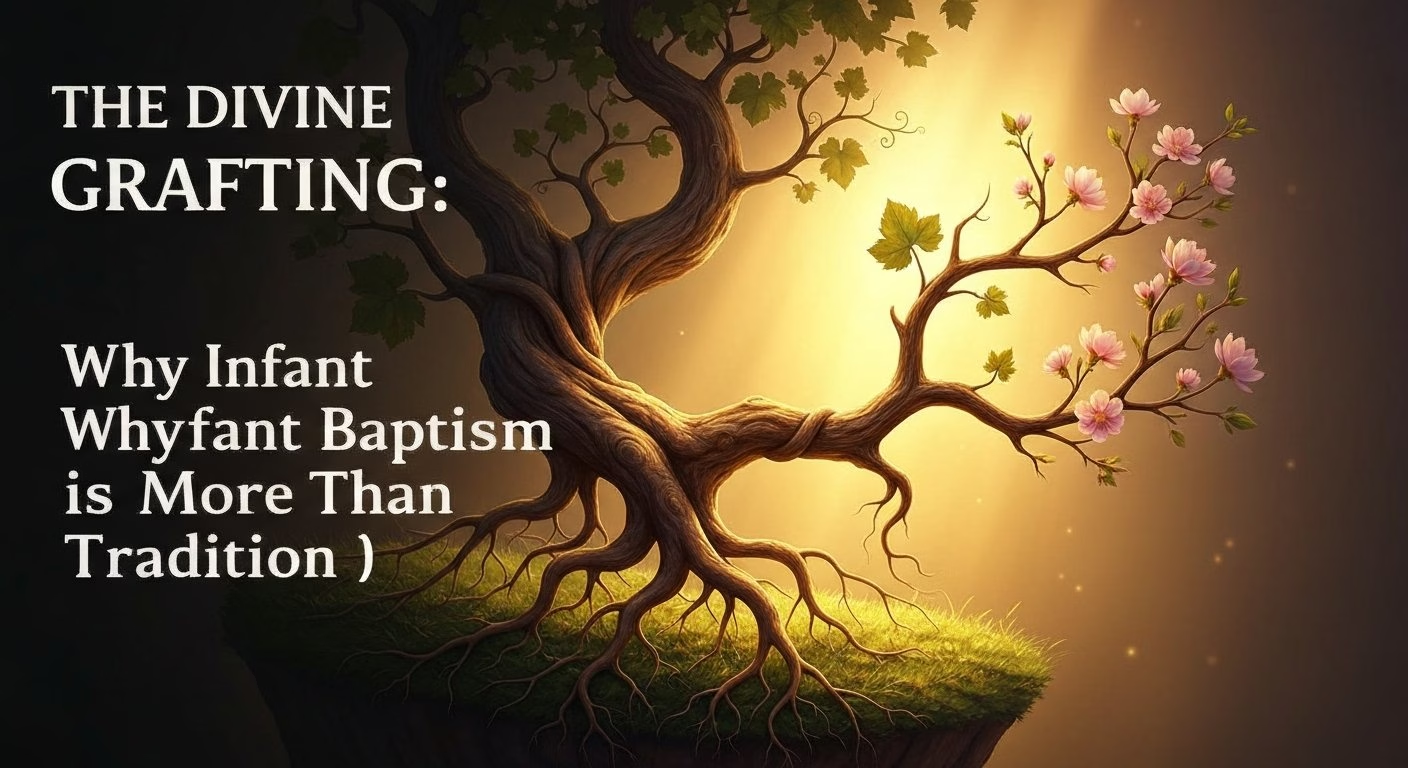
Infant baptism is the ultimate protest against the meritocracy of the modern world. It declares that God’s “Yes” to the child precedes the child’s “Yes” to God. It is an official initiation, a divine grafting of a new branch into the Vine. In a city where everything is earned, baptism is the one thing that is purely received. There is no “baptismal study” that can qualify a human for the mercy of God. There is no entrance exam for the Kingdom. There is only the promise, and the God who keeps it.
The critics of infant baptism often point to the need for a personal confession, yet the narrative of the New Testament offers a much more communal, much more “covenantal” picture. When we look at the Book of Acts, we don’t see a series of isolated individuals making private decisions in a vacuum. We see the Philippian jailer. We see Lydia. And in both cases, the text tells us that not just the individual, but the *whole household* was baptized.
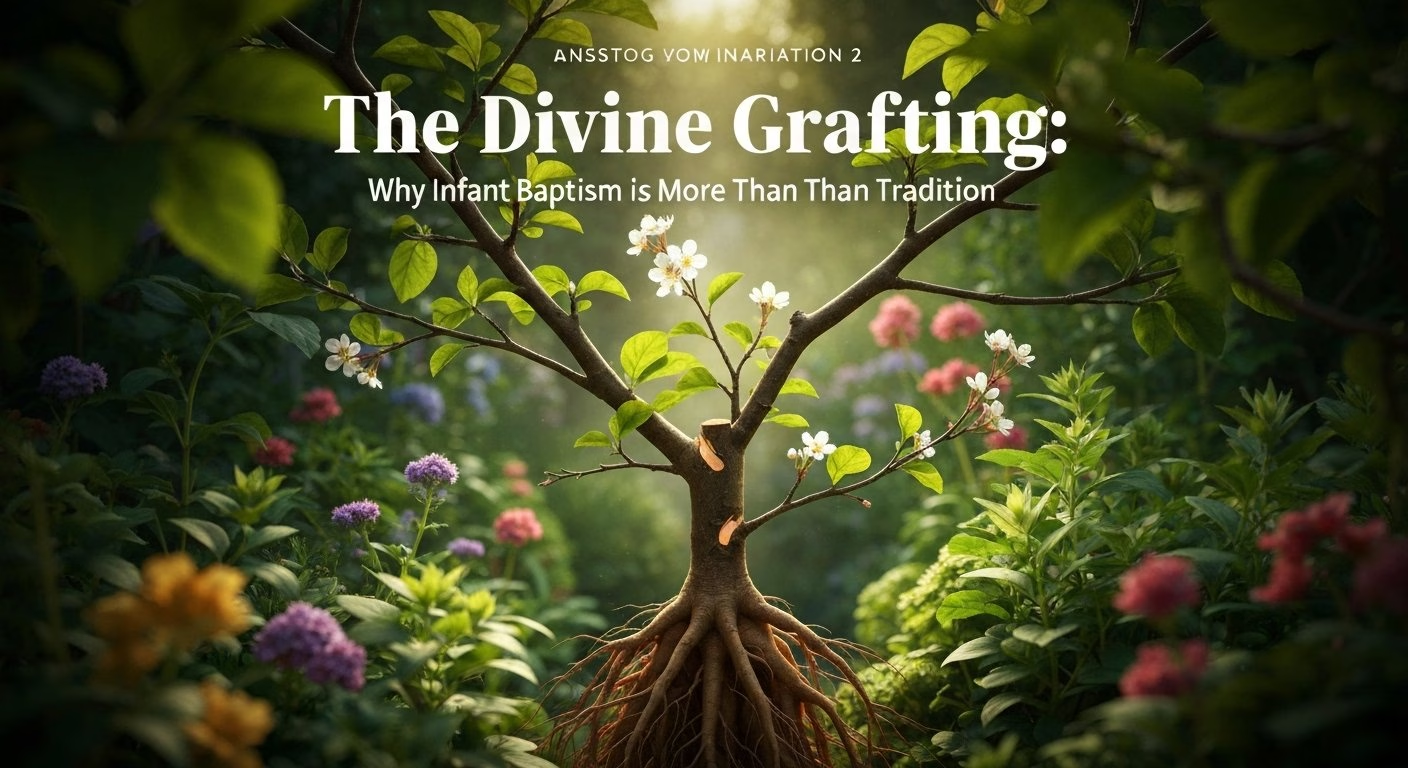
These households likely included servants, children, and infants. There was no modern delay, no four-week orientation class to ensure everyone’s “personal testimony” was sufficiently polished. The head of the house believed, and the entire family was brought under the shadow of the Cross. This wasn’t because of a lack of rigor; it was because of an abundance of theology. They understood that when God claims a person, He often claims their world.
This attachment counts. In the cold geometry of the city, we often feel like isolated nodes, connected only by fiber-optic cables and shared grievances. But baptism grafts us into something permanent. It is an official attachment to the Vine. Statistically and mathematically, there is no “side effect” to being claimed by God in infancy. There is only the security of knowing that your future has been anointed, that you have been marked as Christ’s own forever, long before you were tempted to market yourself to the world.
This brings us to a hard truth that many in our consumer-driven pews find difficult to swallow: where you are baptized matters, because where you are planted matters. We have fallen into the habit of “church shopping,” looking for a community that fits our specific list of requirements—the right music, the right social standing, the right “vibe.” We treat the local church like a boutique in SoHo, ready to walk out the moment the inventory doesn’t match our mood.
But the Vine is not a commodity. If you are here, it is not because you made a savvy consumer choice; it is because God called you here. We must move away from the “grocery store” mindset of faith. You don’t pick a church the way you pick a box of cereal. You pray about where the Spirit is calling you to be grafted. When a branch is attached to a vine, it doesn’t keep looking around for a better vine with better lighting. It stays. It draws life. It bears fruit.
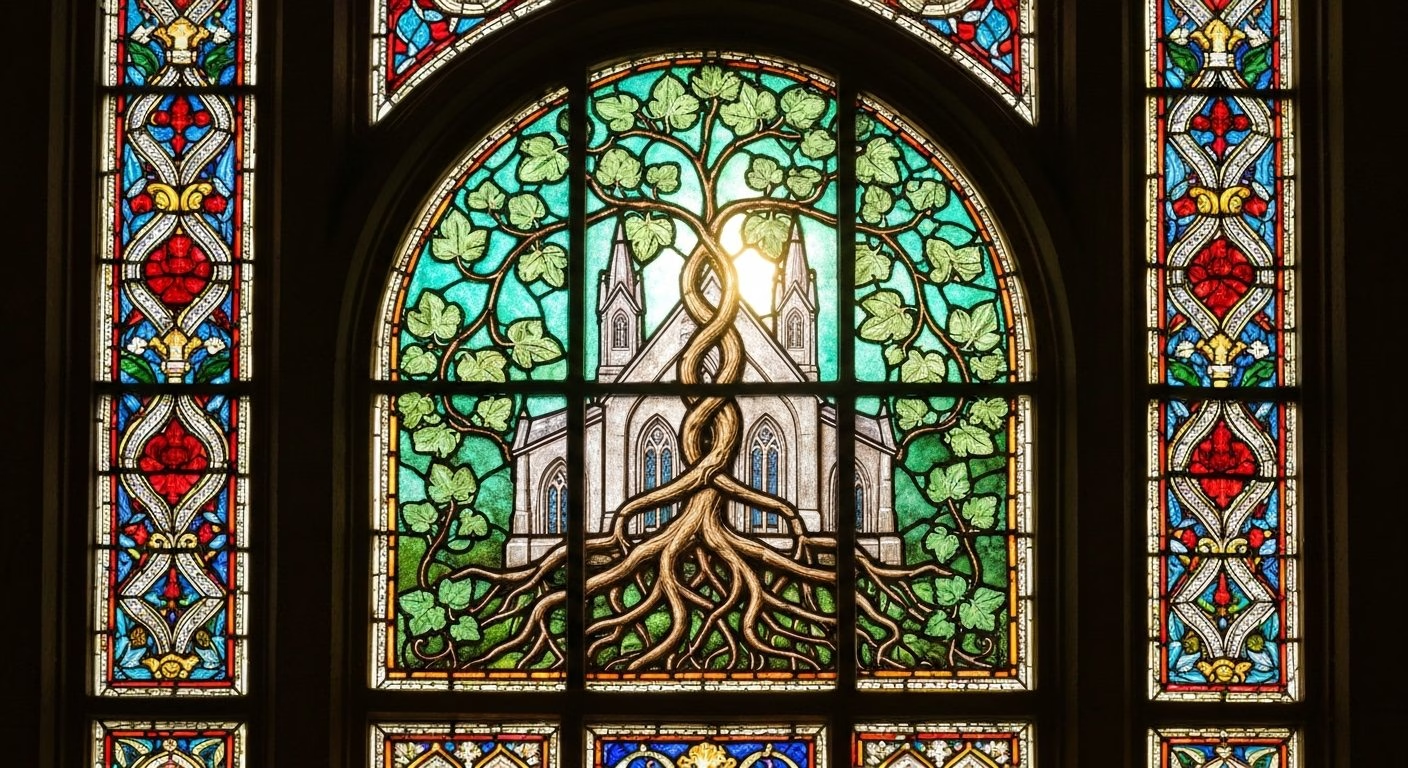
The attachment of baptism is a permanent security. It is a divine anchor in a city that is constantly drifting. To suggest that a person needs to be “re-baptized” as an adult is to suggest that God’s initial “Yes” was somehow insufficient—that His grace was waiting on our competence to become effective. We refuse to practice re-baptism not out of stubbornness, but out of reverence. We believe that when God claims you, He doesn’t stutter. His first move is His final move.
If you find yourself skeptical of these “old-school” practices, or if you have been treating your faith like a curated lifestyle choice, here is how you can begin to move toward the Vine today:
The city will always demand that you prove yourself. The gospel tells you that you have already been claimed. Stop shopping. Start abiding. The Vine is ready to hold you.
ESSAY 02 · THE DIVINE GRAFTING
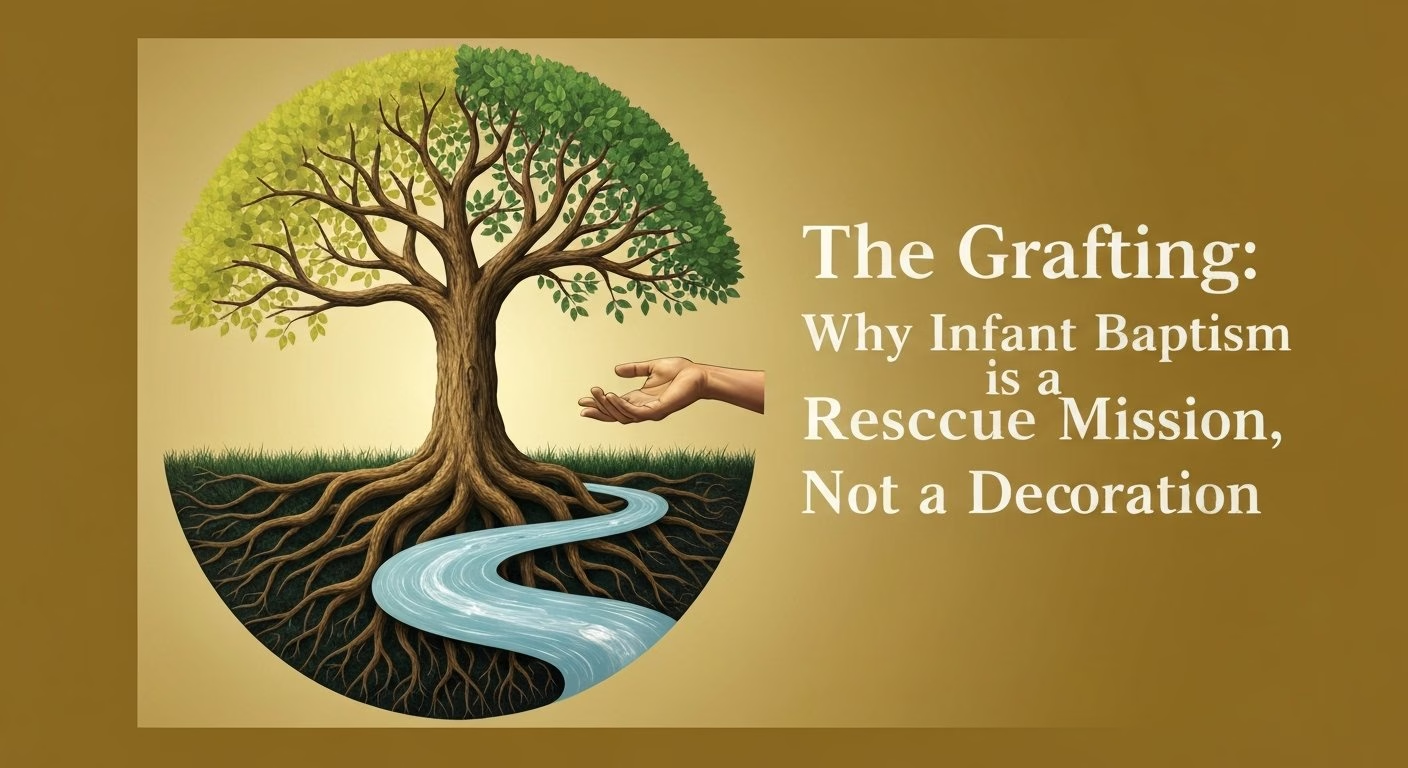
We live in an era of radical autonomy. In the West, and especially here in the pressure cooker of New York City, we’ve been catechized by a secular script that says nothing is real until we choose it. We’ve brought this consumerist “opt-in” mentality into the sanctuary, and it’s wreaking havoc on our theology of the sacraments.
For many modern believers, baptism has been reduced to a religious decoration—a sort of spiritual graduation ceremony where we celebrate our own decision-making. We wait until a child is “ready,” until they have the “right feelings,” or until they can pass a theological exam. We treat God’s grace like a product we purchase once we’ve done the research. But this isn’t the gospel; it’s just another form of works-righteousness dressed up in modern psychological language. We are missing the terrifying and beautiful depth of what it means to be claimed by God before we even know His name.
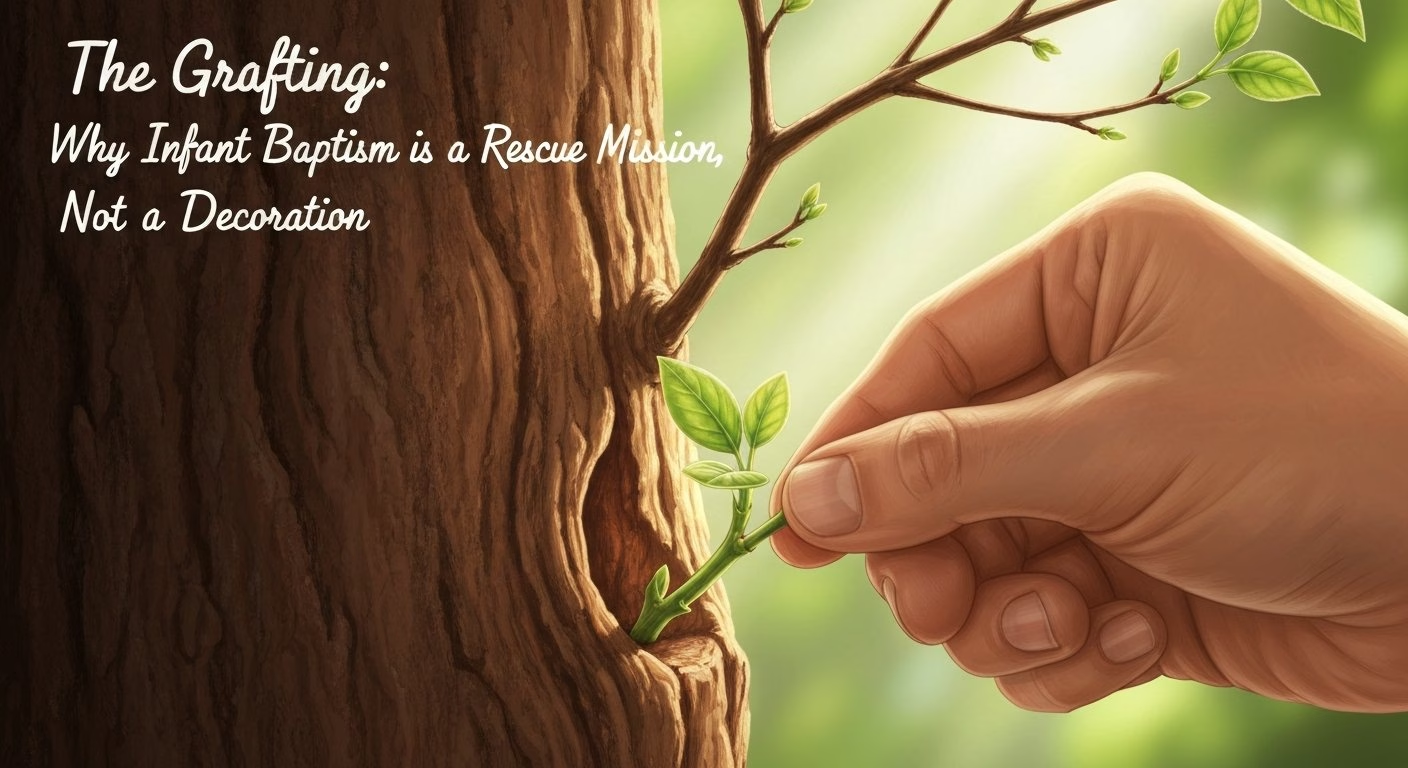
The core of the issue is a misunderstanding of prevenient grace. This is the grace that goes before. It is the scandalous reality that God’s love is not a response to our initiative; our life is a response to His. When we deny infant baptism, we often unintentionally signal that God is waiting on us to make the first move.
But look at the mechanics of the Kingdom. In the book of Acts, we don’t see a series of individualistic, clinical “baptism studies” followed by a waiting period to ensure the candidate has sufficient emotional resonance. We see the household. When the Philippian jailer encounters the living God, he doesn’t just get baptized alone; his entire household is brought into the covenant. There was an urgency. There was a recognition that when the head of a home is grafted into the Vine, the branches come with him.
This isn’t about “old school” tradition for tradition’s sake. It’s about spiritual gravity. Infant baptism is the official act of grafting a child into the life of Christ. It is a declaration over that child’s life that they belong to a different Kingdom before the world has a chance to tell them they belong to the market, the state, or their own desires. It secures a future anointed by the presence of the community and the promise of God.
We have to stop treating the church like a grocery store. In NYC, people “shop” for churches based on the quality of the coffee, the style of the worship, or whether the preaching fits their political sensibilities. This is a disaster for spiritual formation. Attachment counts.
If baptism is the grafting of a branch onto the Vine, then where you are grafted matters immensely. You are not just joining a social club; you are being integrated into a living organism. I see so many parents wandering from church to church, wondering why their children have no spiritual roots. It’s because they’ve never stayed in one place long enough for the sap of the Holy Spirit to flow through the local body into their family.
Statistically and mathematically, there is no “side effect” to bringing a child into the covenant early. In fact, the data of the soul suggests the opposite: those who are raised with the mark of the covenant on their lives carry a different kind of spiritual weight. They don’t have to “find” God; they have to reckon with the God who has already found them. It changes the starting point of their entire existence.
If you’ve been viewing baptism through the lens of modern skepticism, I want to challenge you to reframe the crisis. This is an opportunity to step out of the secular “choice” narrative and into the biblical “covenant” narrative. Here is how you start:
ESSAY 03 · THE DIVINE GRAFTING
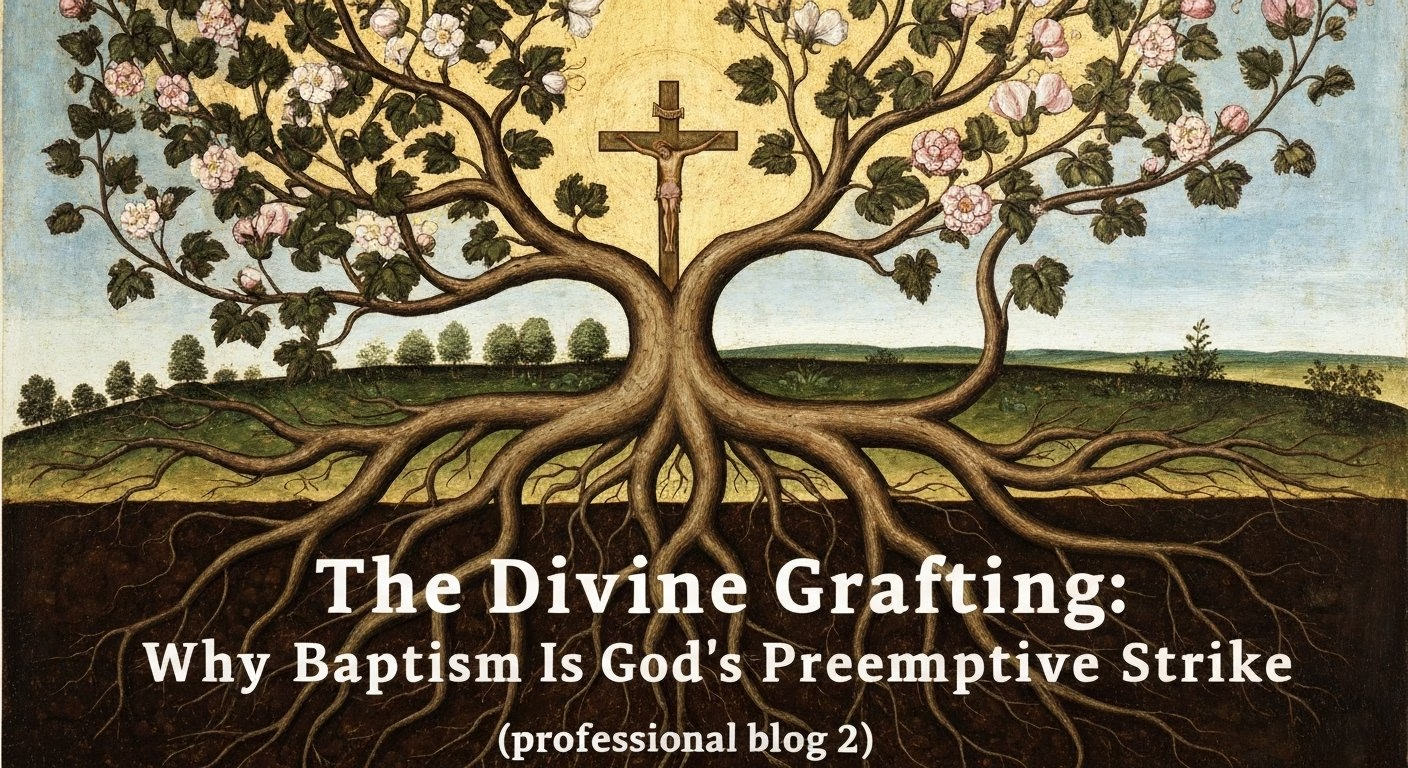
We are a people obsessed with our own “yes.” We treat our autonomy like a small, fragile god, bowing down to the altar of our own preferences, convinced that nothing is real unless we’ve personally signed off on it. We want to be the authors of our own stories, the architects of our own salvation, and the ultimate deciders of when and where God is allowed to touch us. We walk into the sanctuary with the posture of a judge, weighing the worship, critiquing the liturgy, and deciding if the “vibe” fits our personal brand. We think our choice is the thing that makes the thing official.
But then, there is the baby.
I watched a mother hold her son last Sunday. He was small, helpless, and entirely unaware of the weight of the world or the depth of his own need. He hadn’t said a prayer. He hadn’t “accepted” anything. He hadn’t passed a theology exam or even mastered the art of holding his own head up. He was just there—breathing, being, and utterly dependent. And in that moment, as the water was prepared, the vanity of our modern individualism hit the floor and shattered. We think we find God, but the gospel tells a different story. The gospel says that before we were even looking, He was already there. Baptism is the visible, watery proof that God doesn’t wait for our permission to be merciful.

In the world of logic, we like a clean sequence. We want the “if” to precede the “then.” If I believe, then I am saved. If I repent, then I am washed. We want to be the ones to initiate the contract. But the theology of the Scriptures is far more scandalous than our transactional minds can handle. We call it Prevenient Grace. It’s the grace that comes before. It’s the grace that is running toward us while we are still face-down in the dirt of our own making, or in the case of a child, while we are still asleep in our cribs.
To reject infant baptism because the child “doesn’t know what’s happening” is to fundamentally misunderstand the nature of God’s sovereignty. If God’s grace is dependent on our cognitive ability to grasp it, then we are all in trouble. If the efficacy of a sacrament relies on the strength of my intellect or the sincerity of my “decision,” then my salvation is built on the shifting sand of my own psychology. But if God is who He says He is—the Alpha, the One who began the good work—then He has every right to claim what is His before the thing even knows it belongs to Him.
Look at the record. Look at the book of Acts. You see the Spirit moving like a wildfire, but you also see a pattern that offends our modern sense of “individual choice.” When Lydia, a seller of purple goods, had her heart opened by the Lord, it wasn’t just Lydia who went under the water. The text says she was baptized, “and her household as well” (Acts 16:15). When the Philippian jailer saw the power of God break the chains in the midnight hour, he didn’t just pull out a flyer for a six-week “intro to Jesus” class for his kids. The Word says “he was baptized at once, he and all his family” (Acts 16:33). There were no qualification exams. There was no waiting period to see if the toddlers were “feeling the Spirit.” There was simply the providential move of a God who claims entire houses because He is the Lord of all of it—not just the parts that can articulate a testimony.
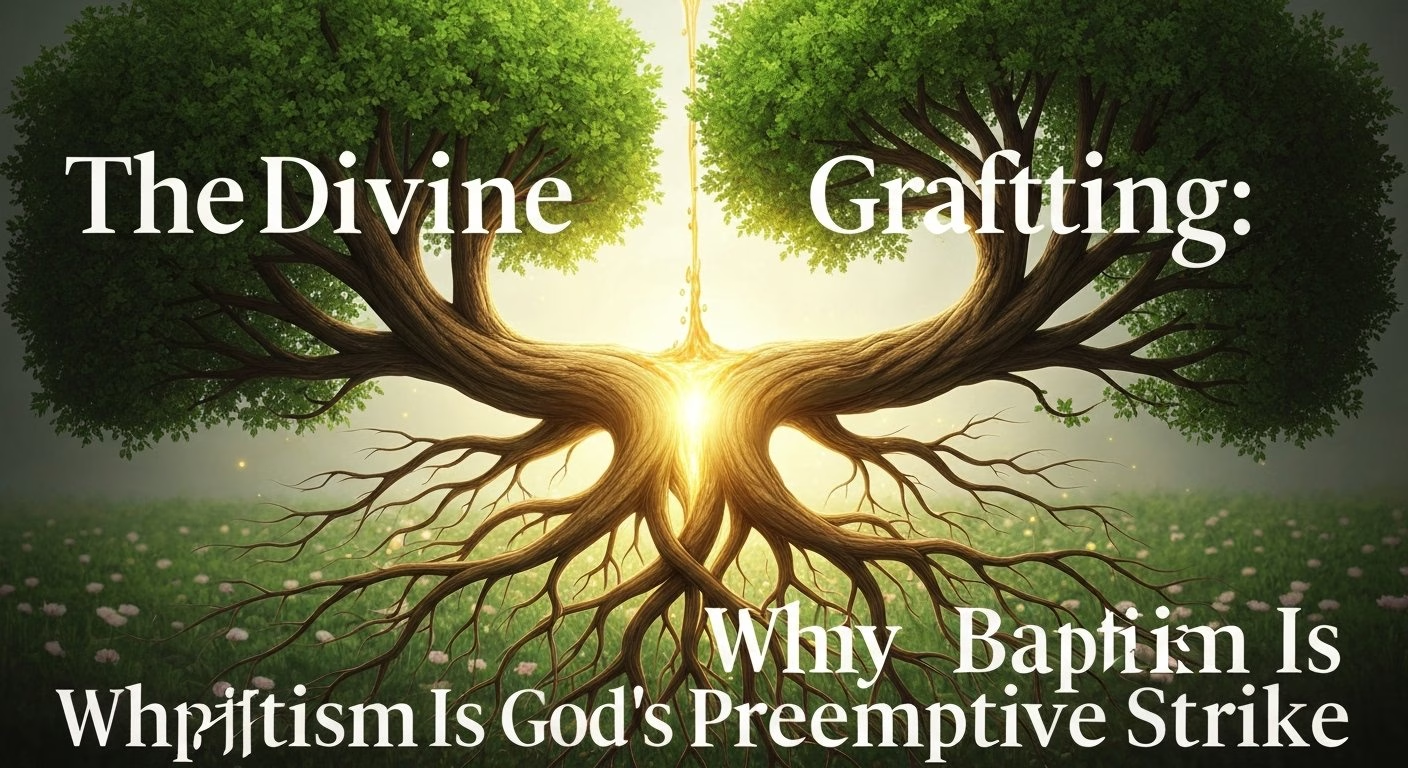
We have to stop viewing baptism as a spiritual merit badge or a public “decoration” for our own journey. It is not a graduation ceremony; it is an initiation. It is a grafting.
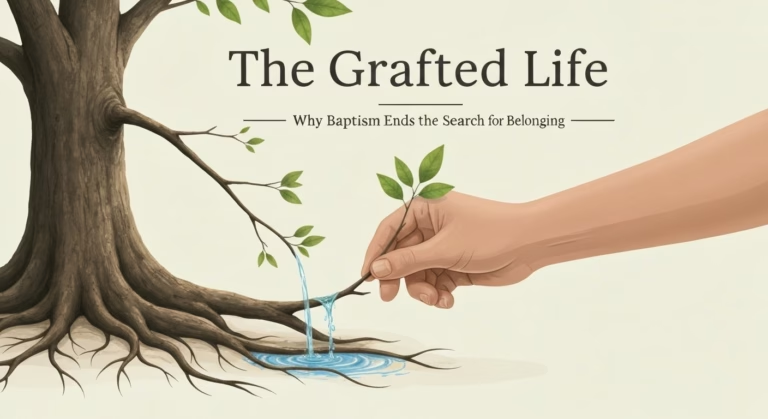
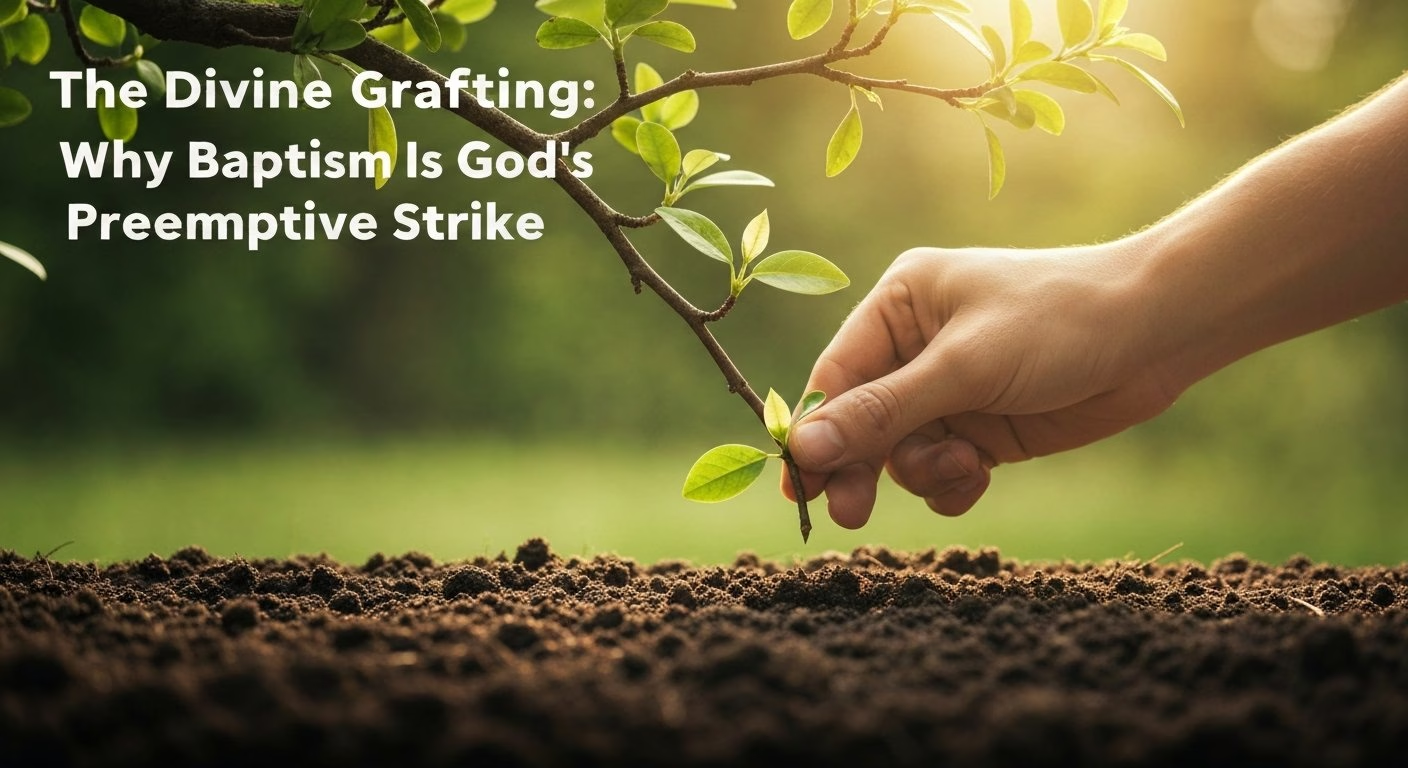
Think about a branch and a vine. If you want a branch to live, you don’t wait for the branch to prove it can produce fruit before you attach it to the source of life. That’s backwards. You graft it in so that it *can* live. You bind it to the trunk, you secure the connection, and you let the sap—the very lifeblood of the vine—begin to flow into the dead wood. The attachment is what makes the growth possible.
Baptism is that official grafting. When a child is baptized, they are being officially positioned under the flow of God’s covenantal life. They are being moved from the kingdom of “self” and “world” and placed into the soil of the Church. This attachment counts for everything. It isn’t a “maybe.” It isn’t a “we’ll see how this goes.” It is an anointing that stays. It is God putting His thumbprint on a soul and saying, “This one is Mine. I have claimed this territory. I am the Gardener here, and I will see to it that this branch is tended, pruned, and kept.”
This provides a security that our “choice-based” culture can never offer. If my belonging to God is based on my choice, then my choice can be unmade. If I am the one who tied the knot, I can untie it. But if God is the one who did the grafting—if He is the one who reached down and bound me to the Vine before I could even wrap my fingers around His—then that security is as permanent as His character. If He is holy, He cannot lie. If He cannot lie, then His promise in the water is the most trustworthy thing in the universe.
We have a problem in the modern church. We approach the house of God like we’re browsing the aisles of a grocery store. We want the best “deal,” the most comfortable “vibe,” and the sermon that doesn’t make us twitch in our seats too much. We treat our presence in a local body as a luxury we afford to God, rather than a calling He has placed on our lives.
But if you believe in the sovereign move of the Spirit, then you have to believe that where you are planted is not an accident. Your presence here, in this body, is a calling. Where you receive baptism—and where you bring your children to be grafted—matters deeply. It is not about the “external factors” of the building or the production value of the service. It is about where the Spirit of God has called you to be rooted.
We have to repent of the consumer mindset. We have to stop shopping and start submitting. If God has called your family to this Vine, then the baptism of your child is not a “tradition” to be checked off; it is a response to a divine summons. It is you saying, “God, I recognize that You move first. I recognize that You have called us here. I am laying this child in the stream of Your grace, trusting that the water You provide is enough to sustain them until their last breath.”
BEGIN THE CONVERSATION
Whether you are considering baptism for yourself or your child, our pastors would be glad to listen, answer questions, and walk with you.
Discover more from Scripture, the arts, and the life of our church community.