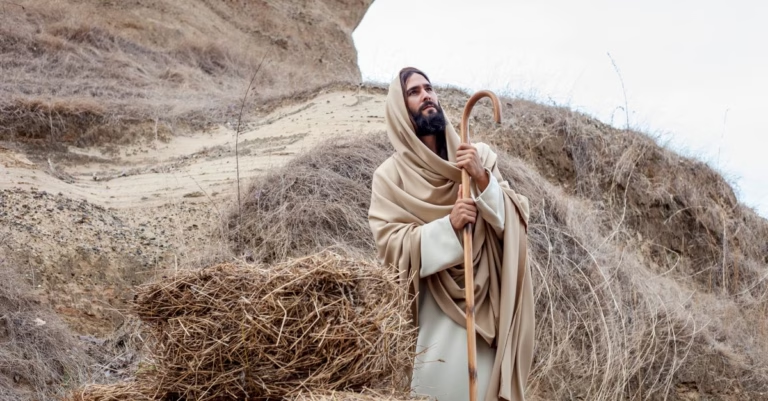
The Logic of the Harvest: From Tomb to Pentecost
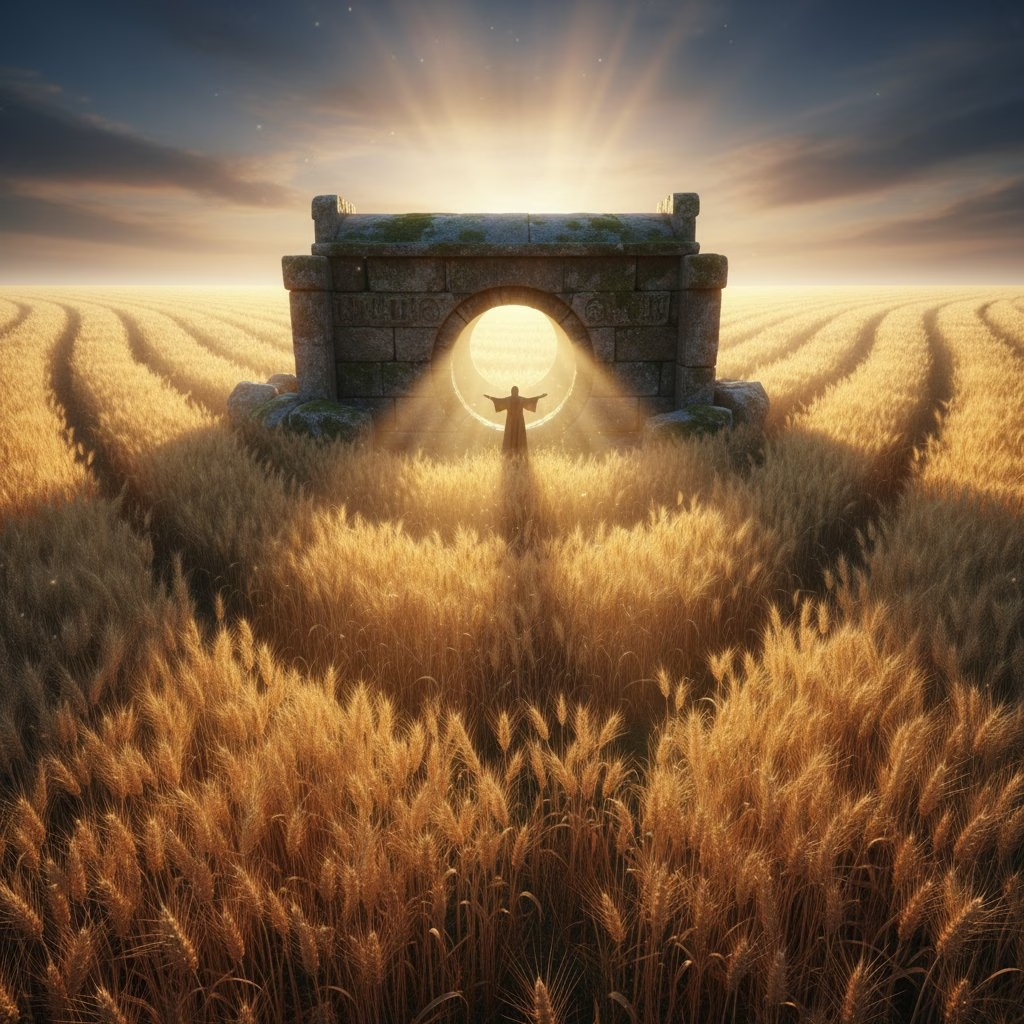
When we speak of the harvest, our modern sensibilities often conjure images of mechanized agriculture or perhaps the quaint nostalgia of autumnal bounty. Yet, there is a far older, more profound rhythm at play, one that undergirds the very fabric of redemption itself. Indeed, **The Logic of the Harvest** is not merely an agricultural metaphor, but a theological principle, a cosmic pattern established at the dawn of creation and brought to its stunning apex in the person of Christ. As we navigate this season, traditionally marked by the Counting of the Omer, tracing a sacred line from the empty tomb to the fire of Shavuot, it compels us to ask: are we merely marking time, or are we actively participating in the unfolding fruitfulness that this divine countdown demands?
The Ancient Rhythm of Expectation: Bikkurim and the Omer
To grasp the profound implications of this period, one must first look to the ancient Hebraic calendar, a liturgical framework that meticulously mapped the rhythm of life to the rhythm of God’s redemptive purposes. The feast of First Fruits, or *Bikkurim*, mandated in Leviticus 23, was not simply an agrarian offering; it was a prophetic declaration. It recognized that the very first sheaf, waved before the Lord, consecrated the entire subsequent harvest. It was an act of faith, an acknowledgment that the promise of abundance was secured by the initial offering, even before the full yield was gathered. Immediately following this ritual, the forty-nine days of the Omer count began, culminating in Shavuot, the Feast of Weeks, which celebrated the giving of the Law and, later, the outpouring of the Spirit. This was a period of sustained expectation, a directed anticipation, where each day was numbered, each moment pregnant with the promise of what was to come. It wasn’t a passive wait, like standing in a queue for a delayed flight, but an active, hopeful vigil. The ancient Israelites understood that the intervening days between the first fruits and the full ingathering were not empty spaces but were themselves part of God’s design for maturation and growth.
Christ, the First Fruits, and The Logic of the Harvest
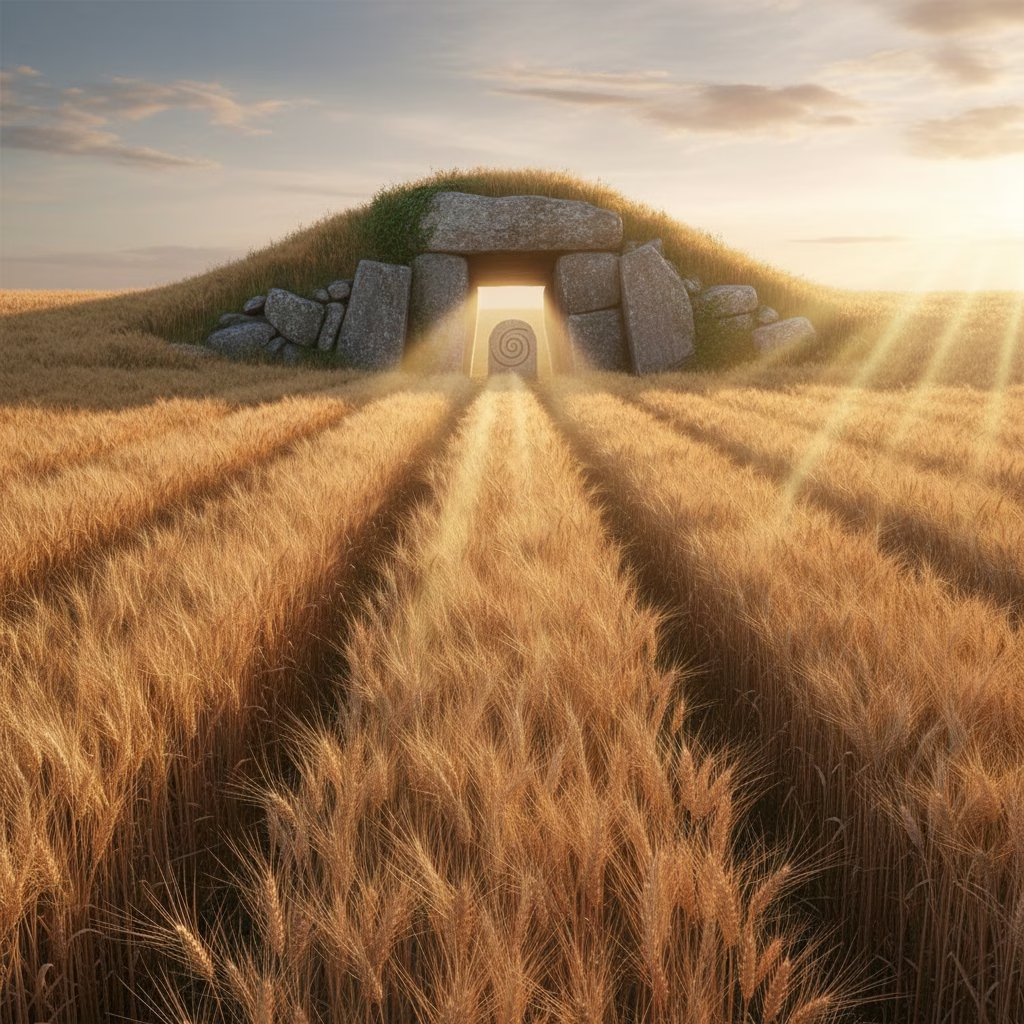
The New Testament, with its characteristic brilliance, does not merely echo these ancient patterns; it fulfills them with breathtaking precision. Paul, in 1 Corinthians 15, declares with unflinching clarity: “But Christ has indeed been raised from the dead, the first fruits of those who have fallen asleep.” This is not merely a poetic flourish. It is a profound theological statement, anchoring the resurrection of Jesus within this established, sacred pattern of *Bikkurim*. Christ’s resurrection was not an isolated miracle; it was the definitive “first sheaf,” the inaugural act that consecrated the entire, subsequent harvest of humanity’s resurrection. Just as the ancient First Fruits offering guaranteed the full harvest, Christ’s emergence from the tomb guarantees the future resurrection of all who are in Him. He is the vanguard, the initial proof, the unassailable promise. The forty-nine days between His resurrection and the Pentecostal outpouring thus become an extension of this same logic: a period of holy tension, a space for the gathered disciples to prepare, to pray, and to actively anticipate the full manifestation of God’s Spirit, which would empower them to participate in the ongoing harvest of souls. This is the heart of **The Logic of the Harvest**, a divine blueprint for redemption that moves from an initial, decisive act to a period of growth and, finally, to a glorious completion.
From Resurrection to Revelation: A Sacred Countdown
The period from the Resurrection to Pentecost is not simply a historical footnote; it is a profound theological blueprint for the church’s ongoing mission. For those disciples gathered in the upper room, it was a time of intense anticipation and instruction. Christ spent forty days with them, opening their minds to the Scriptures, explaining the necessity of His suffering and resurrection, and commissioning them to be His witnesses. This was not a vacation from activity, but a concentrated period of spiritual formation and strategic planning, all under the direct tutelage of the resurrected Lord. The subsequent ten days, after His ascension, were spent in unified prayer, a collective yearning for the promised Spirit. This period teaches us the critical importance of:
* **Intentional Waiting:** Not merely biding time, but actively preparing one’s heart and mind.
* **Scriptural Immersion:** Allowing God’s Word to shape our understanding of His plan.
* **Corporate Prayer:** Uniting with other believers in shared supplication and expectation.
* **Missionary Orientation:** Understanding that the power of the Spirit is given for the purpose of witness and evangelism.
This sacred countdown underscores that divine power and purpose are often preceded by periods of focused preparation and expectant prayer. It resists the modern impulse for instant gratification, instead cultivating a profound patience rooted in God’s faithfulness.
Cultivating Fruitfulness in the Interregnum

If Christ is the First Fruits, and we are living in the subsequent period of the Omer, then this is unequivocally a season of active fruitfulness. This isn’t a passive, quiescent time, a sort of spiritual intermission before the final act. On the contrary, it is the very essence of cultivation. The soil has been broken, the seed planted, and the first sprout has emerged. Now, the work of tending, watering, and nurturing is paramount. The temptation, of course, is to either fall into a kind of quiescent apathy, believing that all the significant work has been done, or to succumb to a frenetic activism that lacks grounding in divine timing and power. Both are equally dangerous deviations from the biblical pattern. Instead, we are called to a dynamic engagement that recognizes the already-but-not-yet tension of God’s kingdom. We are to be about the work of disciple-making, justice-seeking, truth-telling, and mercy-showing, all animated by the profound conviction that the Spirit, unleashed at Pentecost, empowers us for precisely this purpose. To paraphrase a secular maxim, the harvest doesn’t just happen; it is cultivated with intention and perseverance.
The Pentecostal Promise: A Harvest Yet to Come
The culmination of the Omer count at Shavuot, or Pentecost, marks a dramatic inflection point in redemptive history. It was the moment when the Spirit of God was poured out not just on a select few, but on all flesh, empowering the nascent church to carry the message of the resurrected Christ to the ends of the earth. This outpouring was itself a form of harvest, gathering souls into the kingdom. The *Logic of the Harvest* dictates that the First Fruits (Christ’s resurrection) necessitated the subsequent outpouring of the Spirit (Pentecost) to enable the full ingathering of believers throughout the ages. We live in an extended Pentecost, a permanent season of mission and evangelism, where the Spirit continues to work, convict, and transform. The harvest is indeed plentiful, and the laborers are still needed. This reality should compel us to a vibrant, engaged faith, constantly seeking how we might be instruments in God’s hands for gathering in those who are yet outside the fold.
This profound understanding of Christ as the Bikkurim, the First Fruits, fundamentally reorients our perspective on the present age. It moves us beyond mere historical remembrance to active, purposeful participation. How, then, are you counting your days? Are you merely waiting, or are you actively cultivating the spiritual ground around you, sowing seeds of the Gospel, and nurturing the sprouts of faith? The call is clear: engage with the divine rhythm.
If this exploration of **The Logic of the Harvest** has stirred your theological imagination and encouraged you to deeper reflection, consider joining us in prayer and study as we continue to unpack the profound patterns of God’s redemptive plan. Engage with your local community of faith, seek out resources that deepen your understanding of these biblical rhythms, and commit to living out the implications of Christ’s resurrection in your daily life.
The promise of the full harvest, secured by the First Fruits of Christ’s resurrection, awaits its glorious completion. This is not some abstract theological concept, but the very engine of history, moving relentlessly towards the day when every tear will be wiped away, and all things will be made new. That is the ultimate fruition of **The Logic of the Harvest**.
Questions for Reflection
What does this article explain?
It explains the biblical meaning of The Logic of the Harvest: From Tomb to Pentecost and its significance for Christian faith today.
Why should Christians study the biblical feasts?
The feasts remember God’s salvation and presence, and Christians discern their fulfillment through Jesus Christ.