The Shroud of the ‘I AM’: Deep Light

The Shroud of the ‘I AM’ and the Genesis of Dread
Abraham, in that pivotal moment, was not merely experiencing the setting of the sun; he was plunged into a visionary darkness, a terrifying gloom that preceded the most solemn divine promise. This “thick and dreadful darkness” was not an empty void but a crucible, a sacred space where the very foundations of a nation and a covenant were laid. It defies our modern sensibility, which often equates clarity with truth and visibility with progress. We want illuminated paths, not shrouded mysteries. Yet, it is within this very obscurity that God often chooses to reveal the depth of His sovereignty and the unshakeable nature of His promises. It is a reminder that the divine narrative frequently unfolds not in spite of, but precisely *through*, the moments we deem most unsettling and opaque. The dread, in this context, becomes a signpost, not of God’s absence, but of His imminent, often hidden, presence.
The Crucifixion’s Cosmic Night: A Deeper Revelation

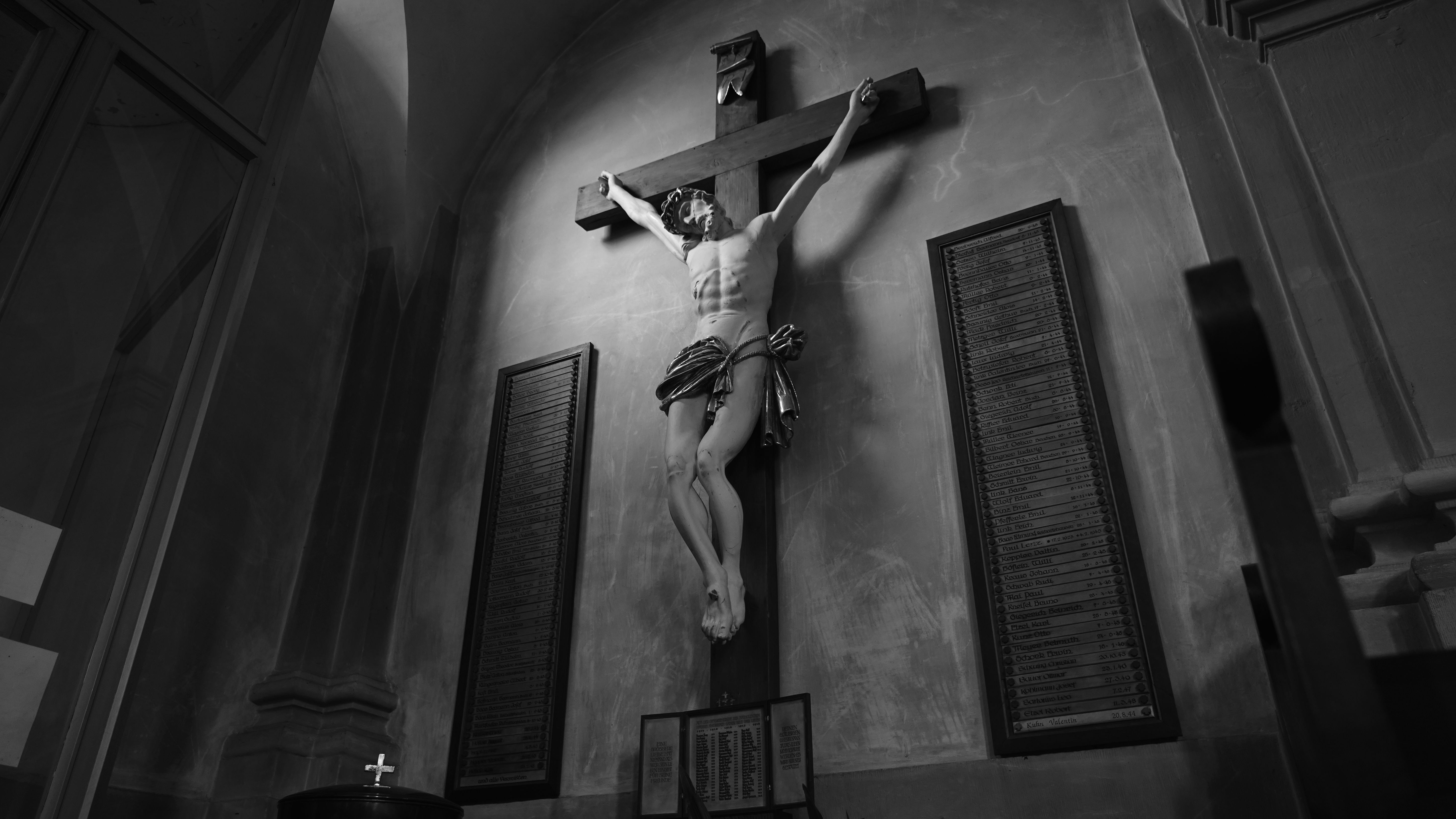
Perhaps no darkness in history bears more theological weight than the three hours of midday gloom that enveloped the earth during the crucifixion of Christ. Here was not just a symbol, but a tangible, cosmic night descending upon the world as its Creator hung dying. The cry from the cross, “My God, my God, why have you forsaken me?” echoes the profound sense of abandonment that can grip the human spirit. For those who witnessed it, it must have felt like the ultimate triumph of evil, the definitive end of hope, the complete extinguishing of the light. Yet, this very moment of utter desolation, this nadir of human and divine suffering, was the precise point of salvation. The darkness was not merely an absence of light; it was a sanctuary for the most profound act of reconciliation, a canvas upon which the greatest love was painted in crimson hues. It was the “hidden work of God” at its most dramatic, forging redemption in the very jaws of despair. The shroud of that crucifixion darkness concealed not defeat, but ultimate victory, demonstrating that God’s power is often perfected in weakness, His light most brilliant when it seems entirely eclipsed.
Samson’s Subterranean Sanctuary: Reconstitution in the Quiet
Consider the profound resilience of Samson, a figure whose life was a tempest of divine anointing and human failing, ultimately finding himself in the ignominious quiet of a Philistine prison. Stripped of his strength, blinded, mocked, and grinding grain like an animal, the darkness of his subterranean cell seemed to be his final, miserable chapter. To his captors, it was the definitive end of his power, a visible testament to their triumph. Yet, in that “unseen space,” in the absence of light and the clamor of the world, something miraculous began to stir: his hair—the physical fiber of his covenant—began to grow again.
This was no mere biological regeneration; it was a spiritual “dark reaction.” Just as a seed requires the crushing weight of the earth and the absence of light to trigger germination, to crack open its shell and send forth a shoot, God often uses the “dreadful darkness” of our lowest points to reconstitute our strength. In the quiet indignity of that prison, Samson was not merely waiting; he was being remade. His physical weakness forced a profound spiritual dependence, allowing God to perform His most sophisticated “interface engineering” in the shadows. This narrative profoundly challenges our assumption that growth always requires optimal, visible conditions. Sometimes, the most potent transformation occurs when we are most hidden from the world’s gaze.
The Dark Reaction: God’s Hidden Interface Engineering

The analogy of the “dark reaction” extends far beyond Samson. It speaks to a fundamental principle of spiritual formation. When we perceive ourselves to be in a season of stagnation, abandoned by the light, or overwhelmed by the demands of life—when the world declares the “quota of bricks” is over and the spirit is broken—it is precisely then that the “I AM” is often performing His most sophisticated “interface engineering” in the shadows. This is not a punitive darkness but a preparatory one, a period of profound re-calibration and strengthening.
What, then, is truly happening in these veiled moments?
* **Refinement of Character:** Just as precious metals are refined in intense heat, our character is often purified and strengthened in seasons of hardship and obscurity. The dross of self-reliance and superficiality is burned away, leaving behind a more authentic faith.
* **Deepening of Roots:** Like a tree that sends its roots deeper during drought, our spiritual foundations are established more firmly when external comforts are scarce. Our dependence shifts from worldly resources to the steadfast provision of God.
* **Clarification of Calling:** When the noise of external expectations and the allure of worldly success fade, the whispers of God’s true calling for our lives often become clearer. Priorities are reordered, and purpose is redefined in solitude.
* **Development of Resilience:** True resilience is not forged in easy victories but in enduring prolonged struggle. The capacity to withstand future storms is built in the very heart of the present darkness.
This “interface engineering” is the process by which God reconfigures our internal architecture, making us more robust, more responsive to His Spirit, and ultimately, more capable of bearing the fruit He intends. It is a testament to the divine wisdom that understands our deepest needs better than we do ourselves, often withholding the light only to allow something more profound to take root.
Embracing the Gloom: Actionable Faith in the Shadows
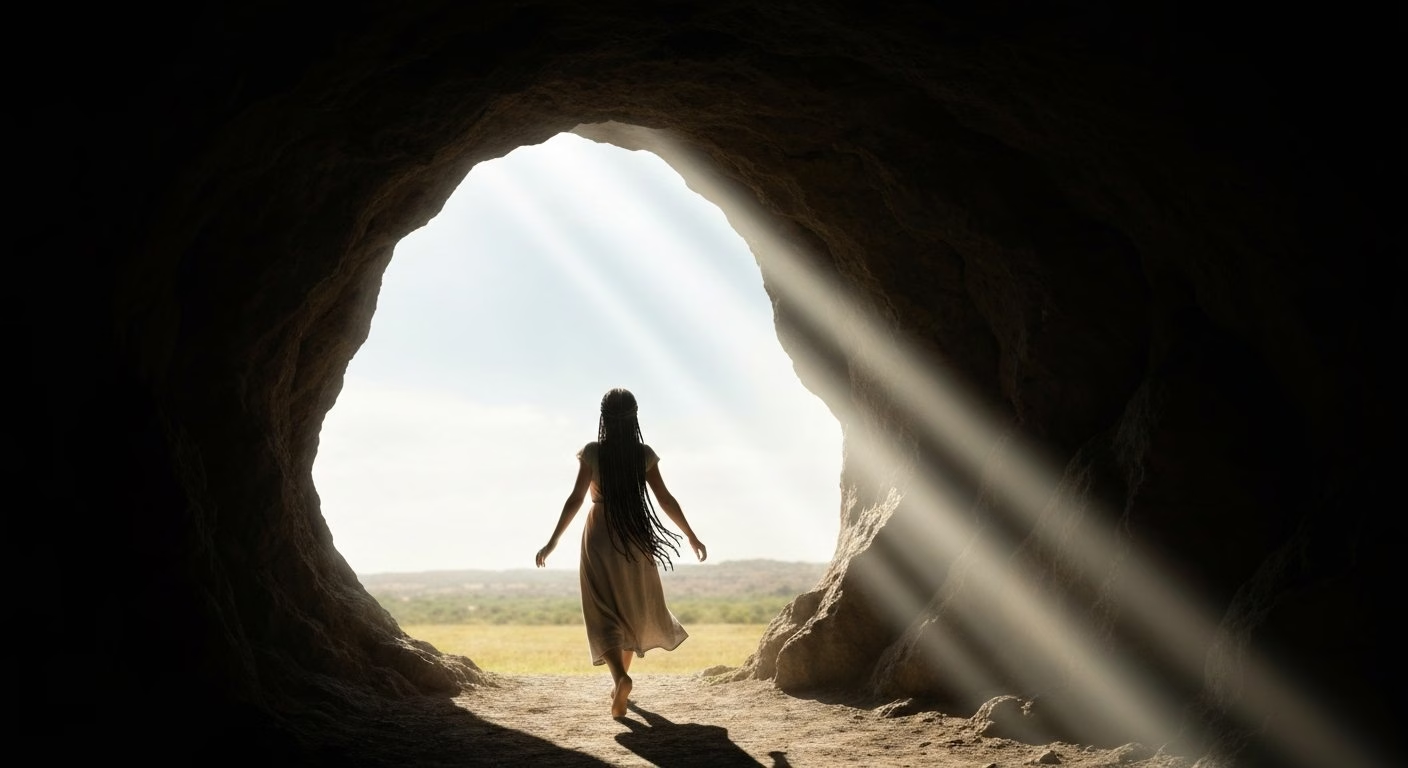
So, what then, is our posture when the thick and dreadful darkness descends, whether individually or collectively? It is certainly not passive resignation, but an active, hopeful trust. It is the challenging discipline of believing that even when we cannot discern the path, the Pathfinder is still at work. It means embracing a faith that sees beyond the immediate horizon, understanding that barrenness may simply be the fallow ground awaiting the spring, and silence the prelude to a profound word.
We are called to cultivate an inner posture that acknowledges God’s sovereignty even when His presence is veiled. This means:
1. **Cultivating Spiritual Disciplines:** Even in darkness, perhaps especially in darkness, prayer, scripture meditation, and quiet reflection become anchors. These are not merely duties, but lifelines to the unseen work of God.
2. **Practicing Lament:** Honest lament, as found throughout the Psalms, is not a sign of weak faith, but a profound act of trust. It expresses our pain to God, acknowledging His presence even in our anguish, believing He hears.
3. **Seeking Community:** While much of the “dark reaction” is internal, faithful community provides crucial external support. Others can bear witness to the light when we cannot see it ourselves, offering tangible grace in shadowed times.
4. **Remembering God’s Fidelity:** Recall past instances of God’s faithfulness. If He has brought us through darkness before, He will do so again. This act of remembrance strengthens our hope for the present and future.
The darkness is not an anomaly to be avoided at all costs, but a recurrent, and often redemptive, feature of the spiritual landscape. To truly understand the nature of divine transformation, we must learn to perceive God’s hand not only in the blinding light of mountaintop experiences but also in the profound, generative quiet of the valley. For in these seasons, under The Shroud of the ‘I AM’, God is always, relentlessly, working. Our call is simply to trust Him in the deep.
Questions for Reflection
What does this article explain?
It explains the biblical meaning of The Shroud of the ‘I AM’: Deep Light and its significance for Christian faith today.
Why should Christians study the biblical feasts?
The feasts remember God’s salvation and presence, and Christians discern their fulfillment through Jesus Christ.