The Enduring Echoes: How Christians Celebrate Sukkot Today
Modern Christian observance of Sukkot varies widely, dependent upon the specific denominational lens, theological movement, and individual spiritual inclinations. It is not a monolithic phenomenon, but rather a spectrum of engagement, from deeply immersive liturgical practices to more reflective, educational acknowledgments. Yet, across this diversity, a common thread often emerges: a desire to connect with the very heartbeat of biblical revelation and to understand the unfolding narrative of God’s redemptive plan.
Dwelling in Temporary Booths: Messianic and Sabbatarian Traditions
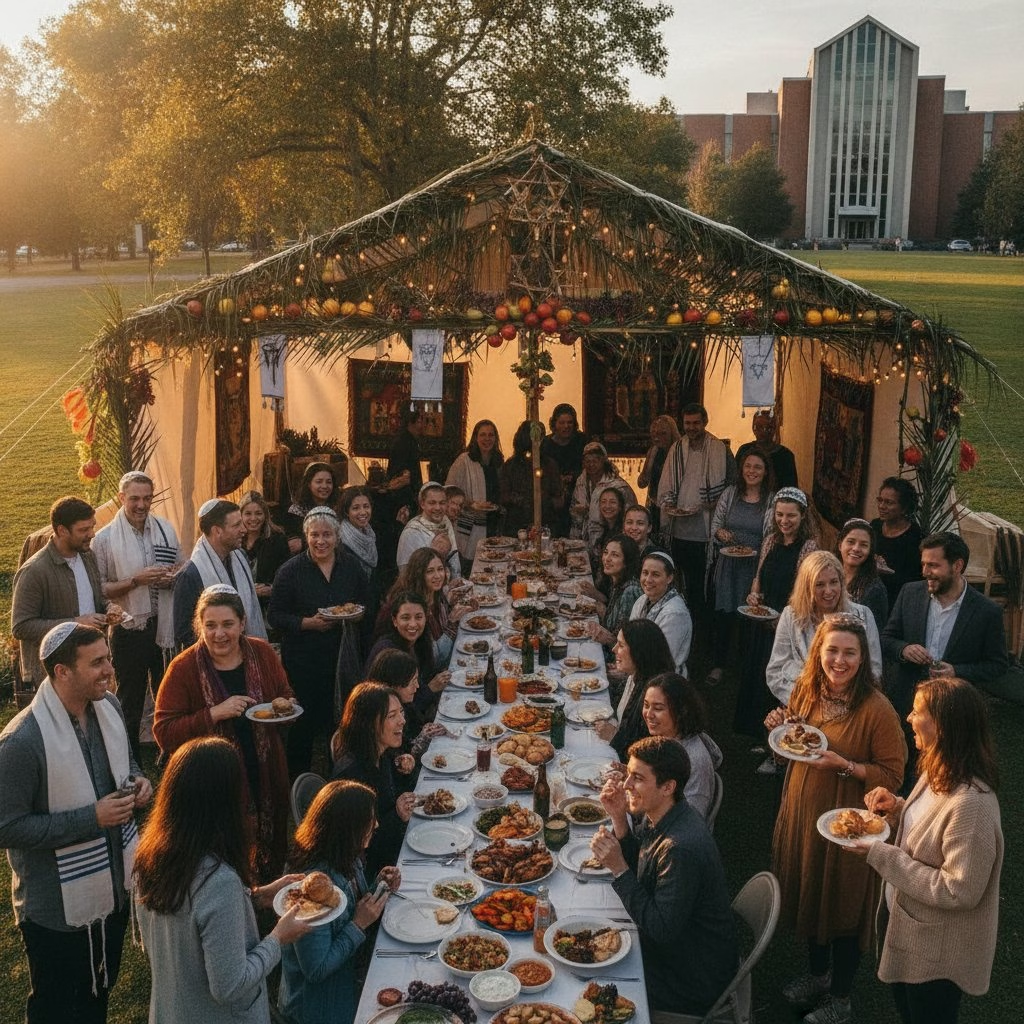
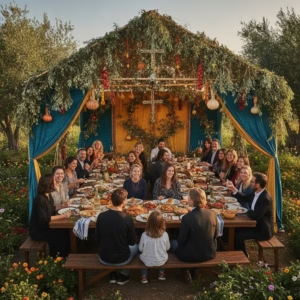
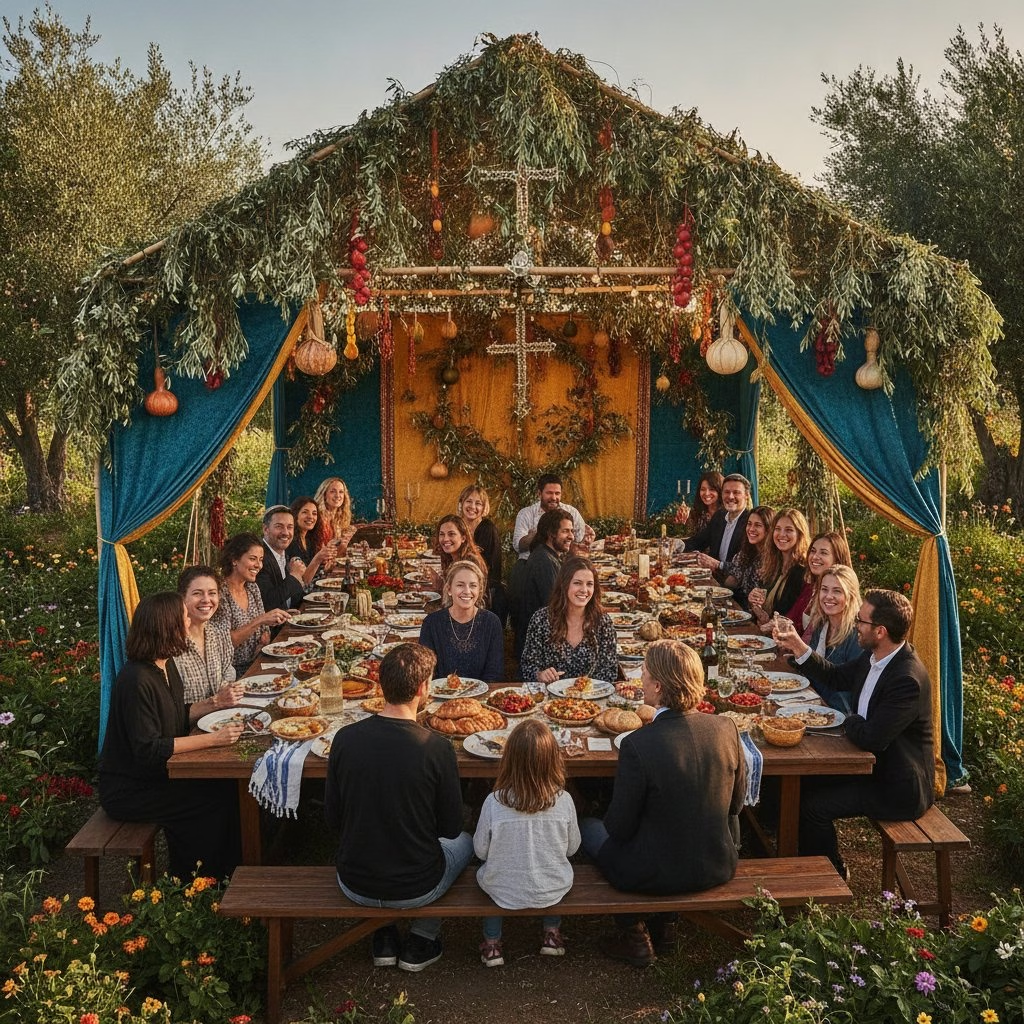
For those within Messianic Judaism, Hebrew Roots, and various Sabbatarian traditions, the observance of Sukkot is often robust, characterized by an earnest effort to replicate, in spirit and form, the biblical injunctions. Adherents of these movements frequently engage in the construction of temporary booths, or *sukkot*, fashioned from palm branches, greenery, and other natural materials. These structures, built on private property or within the precincts of their church or synagogue grounds, serve as more than mere decorative elements; they become spaces for eating meals, fostering fellowship, and, for some, even sleeping for the duration of the week, thereby embodying the transient nature of the wilderness journey.
The ritual elements extend beyond the physical dwelling. Participants often engage in the waving of the *lulav*—a carefully bundled bouquet of palm, willow, and myrtle branches—alongside the *etrog*, a fragrant citron fruit, during praise services. This ancient practice, laden with symbolism, becomes a tangible expression of rejoicing and prayer. Festive greetings are exchanged, alms are given, and communal celebratory meals are shared, reinforcing the bonds of community and shared faith. In certain Sabbatarian and Church of God traditions, a unique convention has developed where members set aside a “second tithe” throughout the year, specifically designated for travel. This fund enables them to journey to regional campgrounds, convention centers, or hotels for eight days of intensive worship, teaching, and communal recreation, transforming the ancient pilgrimage into a modern spiritual retreat.
Educational Encounters and Global Pilgrimages: Evangelical Engagements with Sukkot
Beyond the more direct observances, a significant segment of Evangelical and non-denominational churches approaches Sukkot with an educational and fellowship-oriented focus. Here, the emphasis shifts from strict ritual adherence to pedagogical engagement. Many of these churches construct communal sukkot on their grounds, not primarily for dwelling, but as tangible teaching tools. These structures serve as visual aids to illuminate biblical narratives, helping congregants understand God’s enduring provision, the profound mystery of the incarnation—Christ tabernacling among us—and the intricate Hebraic roots that underpin Christian faith. It is a way of reclaiming a historical literacy often lost in the modern ecclesiastical landscape, fostering a deeper appreciation for the ancient pathways of faith.
Further afield, parachurch organizations, most notably the International Christian Embassy Jerusalem (ICEJ), orchestrate annual international Sukkot gatherings in Jerusalem. These events draw thousands of Gentile Christians from around the globe, uniting them in celebration alongside their Israeli hosts. These pilgrimages are powerful expressions of solidarity, worship, and prophetic anticipation, forging connections that transcend national and cultural boundaries, and offering participants a firsthand experience of the biblical land during a time of profound historical and spiritual significance. In specific Catholic contexts, such as the Saint James Vicariate for Hebrew-Speaking Catholics in Israel, believers integrate traditional Sukkot customs into their local parish life. This integration is understood not as a deviation from Catholic doctrine, but as a vibrant expression of their local cultural heritage, all while maintaining full communion with Rome, illustrating the diverse ways in which ancient traditions can find new life within established faith structures.
The Deeper Resonance: Why Sukkot Matters for Christian Theology
Christians who choose to observe or even merely study Sukkot are often drawn by its profound christological, prophetic, and historical significance. It offers a prism through which to view the sweep of salvation history, revealing layers of meaning that might otherwise remain obscured. This is not merely an academic exercise, but a spiritual one, enriching faith and deepening understanding.
A Tabernacle of Truth: Christological and Prophetic Significance
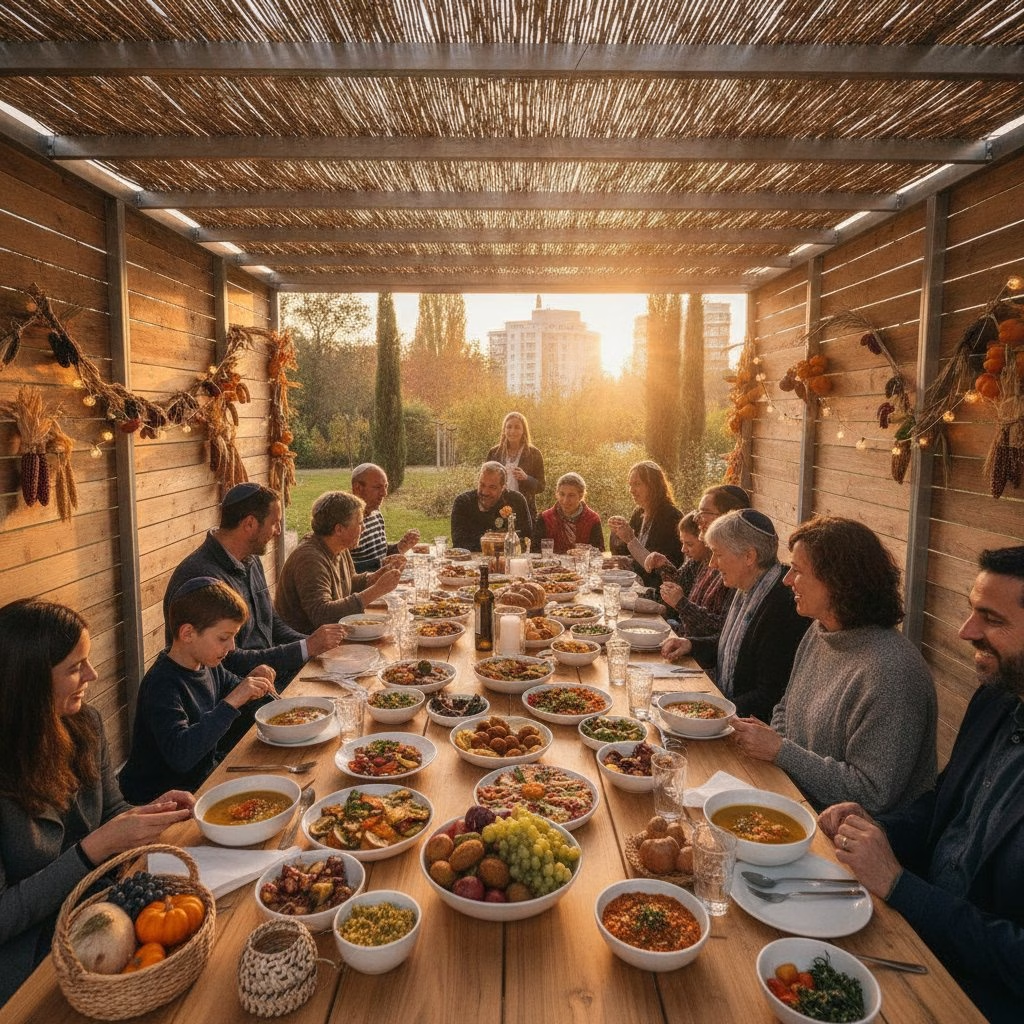
One of the most compelling reasons for Christian engagement with Sukkot lies in its profound christological implications. The Gospel of John, in its majestic prologue, declares, “The Word became flesh and dwelt [literally, ‘tabernacled’ or ‘skēnōsen’] among us” (John 1:14). Sukkot, with its temporary dwelling, serves as a visceral, physical reminder that Jesus, the eternal Word, took on a temporary “tabernacle” of human flesh. He entered our fragile, transient world to dwell with humanity, ultimately offering Himself as the ultimate sacrifice. This feast, then, becomes a powerful theological echo, pointing directly to the incarnation, the very heart of Christian belief.
Beyond its past fulfillment, Sukkot also resonates with profound prophetic significance. While the spring Levitical feasts (Passover, Firstfruits, Pentecost) found their fulfillment during Jesus’ First Advent, the fall feasts are widely viewed as prophetic rehearsals for His glorious Second Coming. Sukkot, in particular, prefigures the future Millennial Kingdom and the eternal state, when God will permanently dwell with His people, a dwelling far more glorious and lasting than any temporary booth. Old Testament prophecy, especially Zechariah 14:16–19, foretells a time when all nations will ascend to Jerusalem to celebrate the Feast of Tabernacles, a vision echoed in Revelation 7:9, which depicts a vast, international crowd standing before the throne, holding palm branches—a clear allusion to the Sukkot rituals. This eschatological dimension transforms the feast from a historical remembrance into a vibrant anticipation of God’s final triumph and the consummation of His kingdom.
Moreover, Sukkot serves as a poignant remembrance of God’s miraculous protection, guidance, and provision during Israel’s 40 years in the desert. For Christians, this historical memory becomes a tangible reminder that earthly life itself is a temporary pilgrimage, a journey through a wilderness, and that true security, ultimate belonging, and eternal provision rest solely in God’s faithfulness. This pilgrimage motif resonates deeply with the Christian understanding of life as a sojourner, looking toward a heavenly city.
Studying Sukkot also unlocks the historical and theological context of some of Jesus’ most profound teachings, particularly those found in John 7–9. Without an understanding of the feast’s traditional water-drawing and light-illumination rituals, the full depth and revolutionary claims of Jesus calling Himself the “Living Water” and the “Light of the World” remain tragically obscured. To comprehend these declarations in their original context is to grasp their radical nature and profound implications for those who first heard them.
Voluntary Observance: Sukkot and New Covenant Freedom
It is crucial to underscore that mainstream Christian theology emphasizes that observing the Levitical feasts is not a requirement for salvation or righteousness under the New Covenant. This position is firmly rooted in the Apostle Paul’s guidance, particularly in Colossians 2:16–17 and Romans 14:5–6, where he underscores freedom from ritualistic obligation. Rather, for Christians, the celebration or reflection upon Sukkot is a voluntary expression of gratitude, a pedagogical tool for education, and a source of profound spiritual joy. It is an act of spiritual liberty, not legalistic duty, allowing believers to engage with ancient truths without sacrificing the freedom found in Christ.
The diverse ways **how Christians celebrate Sukkot today** reveal a rich tapestry of faith, history, and eschatological hope. Whether through the literal construction of booths, educational initiatives, or global pilgrimages, the enduring significance of this ancient feast continues to resonate. It speaks to the incarnation, the future kingdom, and the enduring providence of God, inviting Christians to ponder their own pilgrimage and the ultimate dwelling place God prepares for His people.
As we navigate a world often bereft of deep historical moorings, the contemplation of Sukkot offers an anchor, connecting us to a story far grander than our own. Consider exploring the historical texts, engaging with these ancient themes, and perhaps even building a simple sukkah with your family or church. What might God reveal to you about His provision, His presence, and His future promises? The invitation to reflect on these timeless truths remains open, beckoning us to a deeper, more textured understanding of our faith.