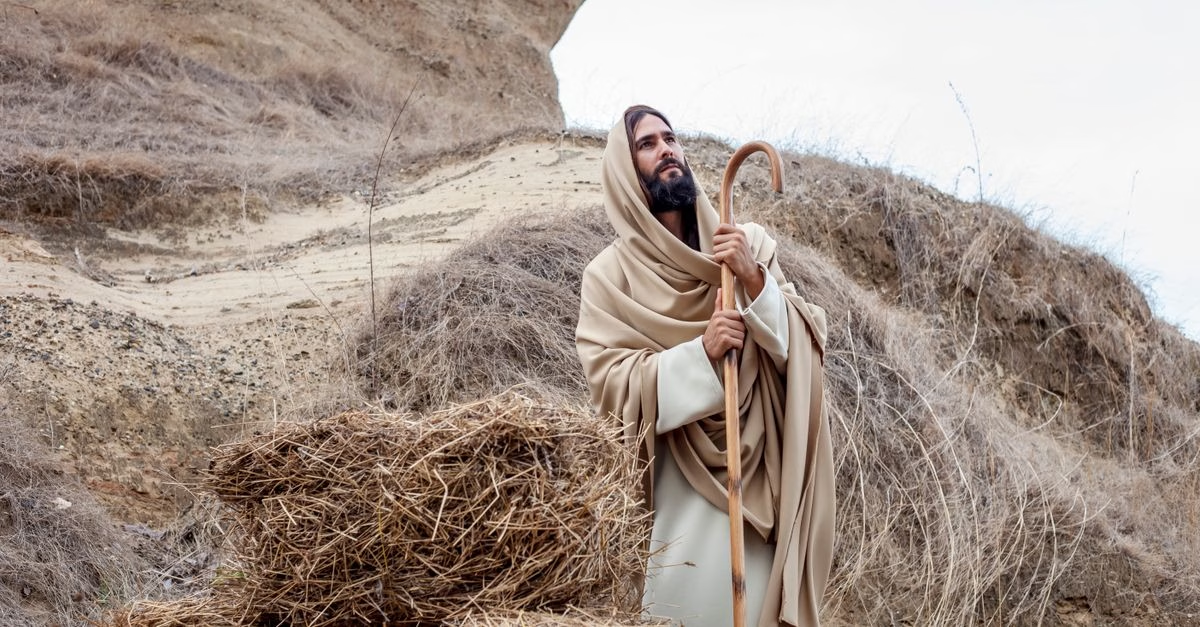
How Jesus Celebrated the Feast of Tabernacles (Sukkot) offers a profound lens through which to consider our own relationship with historical faith practices; indeed, what does it mean for us today when we observe how the very Son of God engaged with the rhythms of an ancient covenant? For many contemporary Christians, the Old Testament feasts can feel like a distant, almost alien landscape—a collection of arcane rituals belonging to a different era, perhaps even a different people. Yet, to understand Jesus, to grasp the full implications of his ministry and person, one must grapple with the Jewish context that defined his earthly life. He was not a detached observer but an active participant, an observant Jew operating within Second Temple Judaism, whose every act and pronouncement resonated with the deeply ingrained symbols and expectations of his people.
The Enduring Echo of Ancient Festivals
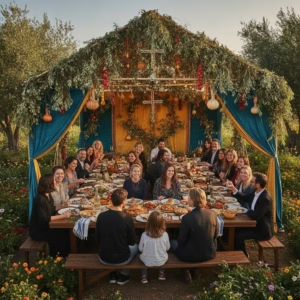
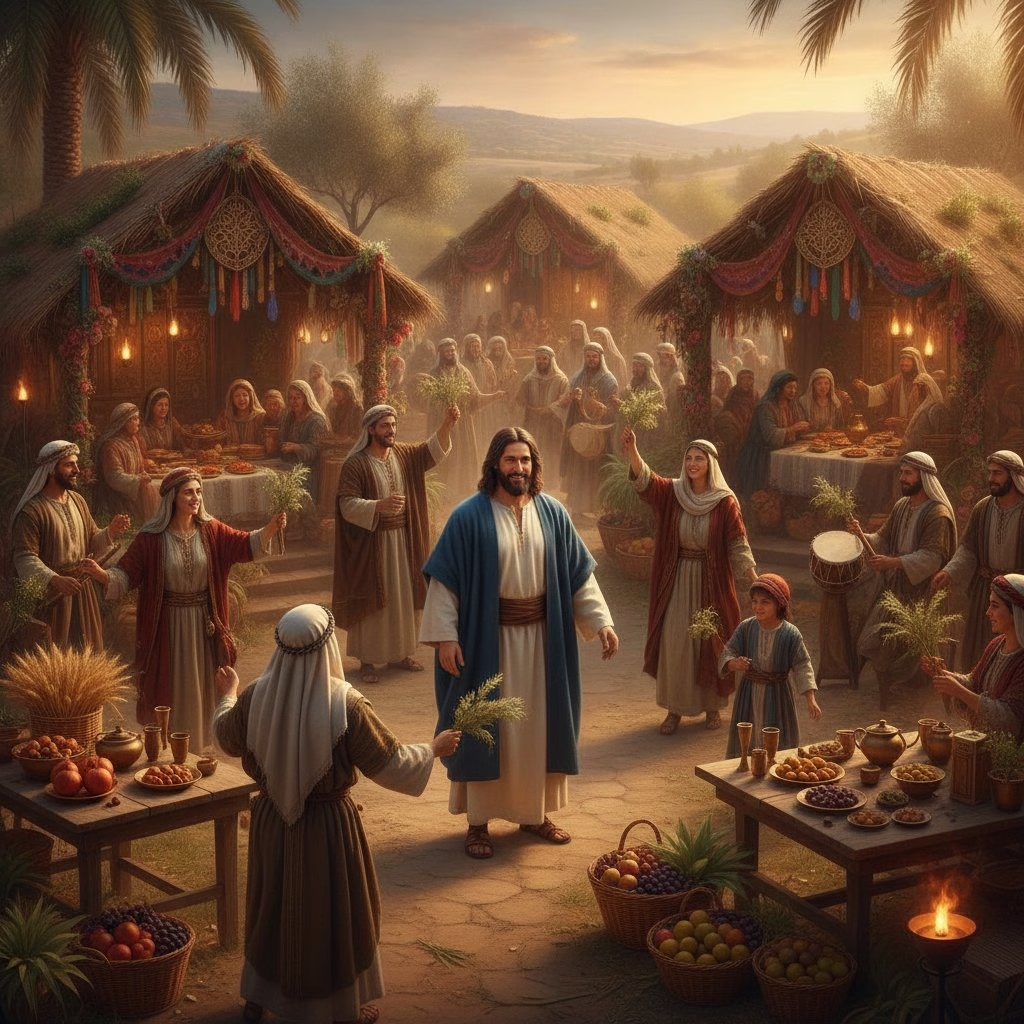
To approach the Feast of Tabernacles, or Sukkot, is to step into a vibrant tapestry of remembrance, hope, and eschatological longing. This autumn festival, one of the three great pilgrimage feasts, commanded the faithful to journey to Jerusalem, to dwell in temporary booths (sukkot) for seven days, and to rejoice before the Lord. It was a tangible, sensory experience designed to recall Israel’s wilderness wanderings—their reliance on divine provision, their journey from bondage to promise, and their anticipation of a future ingathering. The very act of constructing a flimsy shelter, open to the sky, was a theological statement: here we have no lasting city, but we seek the city that is to come. For centuries, this ritual pulsed through the heart of Jewish life, shaping identity and perspective. The question for us, then, is not merely one of historical curiosity, but one of spiritual resonance: how do these ancient echoes inform our understanding of the Christ who fulfilled them?
How Jesus Celebrated the Feast of Tabernacles (Sukkot): A Radical Reinterpretation
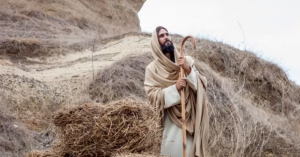
The Gospel of John, particularly chapters 7 and 8, provides an unparalleled window into how Jesus Celebrated the Feast of Tabernacles (Sukkot). This was no casual observance; it was a strategic and deeply significant engagement. John recounts Jesus’s journey to Jerusalem, initially in secret, wary of the mounting opposition from religious authorities, but soon teaching publicly in the Temple courts midway through the eight-day festival. This public appearance during such a high-profile event was a deliberate act, positioning Jesus squarely within the central religious life of his people, even as he challenged its existing power structures.
What becomes clear is that Jesus did not merely participate in the feast; he became the very embodiment of its deepest meaning. He leveraged the specific Temple rituals of Sukkot, not to abolish them, but to reveal his identity and ministry in a way that would have been both profoundly familiar and utterly revolutionary to his listeners. He didn’t just attend; he transformed the meaning of attendance.
Water, Light, and the Promise of the Spirit
The rituals of Sukkot were rich with symbolism, and Jesus masterfully drew upon them to declare his messianic claims. Consider two primary ceremonies:
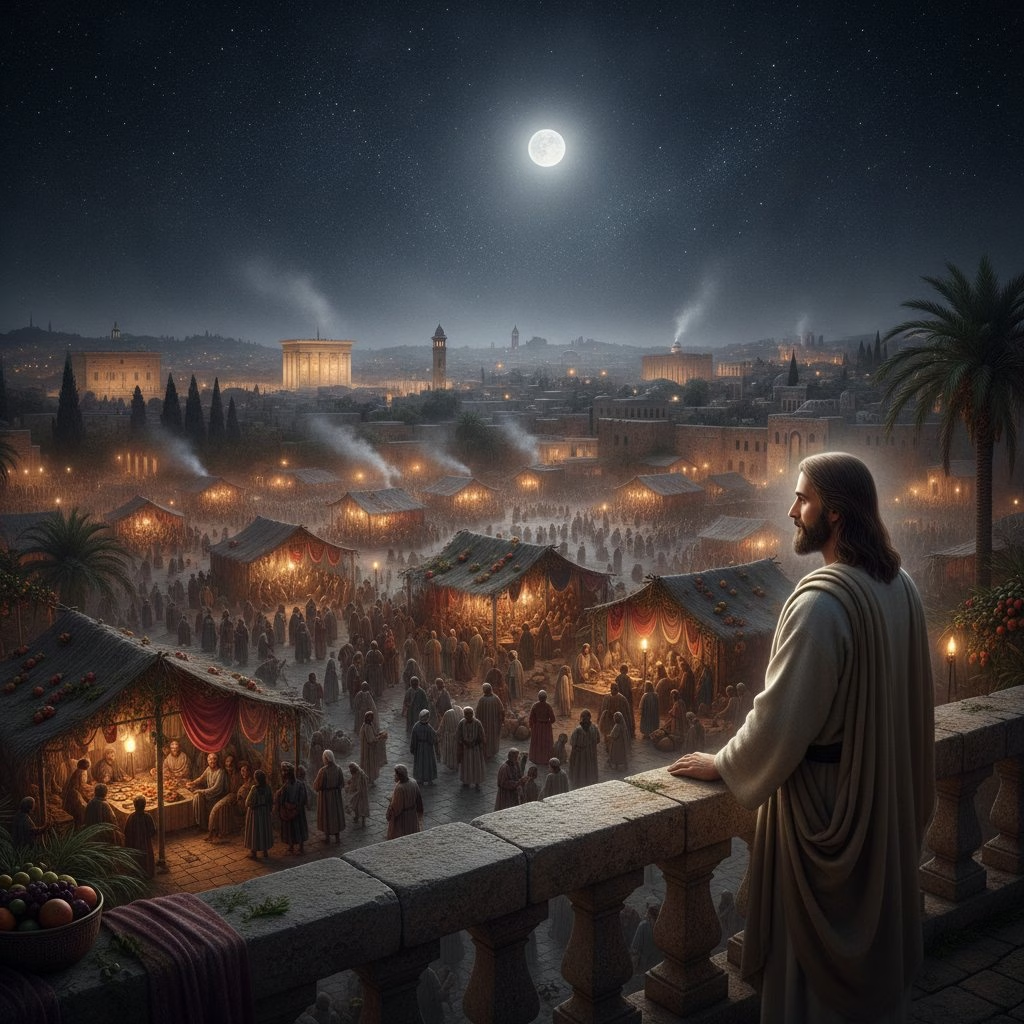
- The Water-Libation Ceremony: Each morning, a procession of priests descended from the Temple to the Pool of Siloam, drawing water in a golden vessel. They would carry this water back, pouring it over the Temple altar alongside wine, to the sound of trumpet blasts and praise. This vivid ceremony symbolized God’s provision in the wilderness and the future outpouring of the Holy Spirit (Ezekiel 36:25-27, Isaiah 12:3). On the “last and greatest day of the feast” (John 7:37–39), Jesus seized this moment. He stood up in the Temple, in the very place where the water ritual had just occurred, and proclaimed: “If anyone is thirsty, let him come to me and drink. Whoever believes in me… streams of living water will flow from within him.” The Gospel writer explicitly notes that this “living water” pointed to the Holy Spirit, which believers were yet to receive. This wasn’t merely a spiritual analogy; it was a direct, audacious claim to be the fulfillment of the ceremony itself, the ultimate source of spiritual sustenance.
- The Temple Illumination Ceremony: Each night of Sukkot, four massive golden lampstands, standing over 70 feet tall in the Court of the Women, were lit. Their light reportedly cast illumination across all of Jerusalem, a powerful visual remembrance of the pillar of fire that guided Israel in the wilderness. It was a beacon, a symbol of divine presence and guidance. In proximity to these dazzling lights, Jesus declared in John 8:12: “I am the light of the world. Whoever follows me will never walk in darkness, but will have the light of life.” Again, Jesus did not merely observe the light; he asserted himself as the living, eternal light that the ceremony merely foreshadowed. He wasn’t pointing to the lampstands; he was pointing to himself.
These pronouncements were not abstract theological statements but direct engagements with the very fabric of the festival. Jesus was, in effect, saying: “You celebrate this feast to remember God’s provision of water and light, but I *am* that provision. You commemorate a past deliverance, but I offer a present and future salvation.”
Freedom from Sin’s Tabernacle
Beyond the specific rituals, the overarching themes of Sukkot provided a powerful backdrop for Jesus’s teachings. As pilgrims lived in temporary shelters, commemorating Israel’s deliverance from Egyptian bondage, Jesus used the immediacy of this experience to teach about a deeper, more profound freedom. The physical liberation from Egypt, celebrated during the feast, became a metaphor for the spiritual freedom he offered. Standing amidst the temporary dwellings, Jesus taught about true spiritual freedom from the bondage of sin, declaring, “the truth will set you free.”
The very act of dwelling in temporary shelters reminded them that their true home was not on earth, but in God’s eternal presence. Jesus’s message during Sukkot underscored this, showing that ultimate freedom and rest were found not in a physical land or a temporary booth, but in him. His presence at the feast wasn’t just about cultural adherence; it was a direct challenge to the superficiality of some religious observance, calling his audience to a deeper, Spirit-led reality.
Engaging the Past in the Present: A Call to Reflect
So, what does this mean for us, inheritors of the New Covenant, who live on this side of the cross and resurrection? We are not called to meticulously recreate the ancient rituals of Sukkot in our churches or homes. The apostle Paul, in Colossians 2:16-17, reminds us that these festivals were a “shadow of the things to come, but the substance belongs to Christ.” Jesus fulfilled them, rendering their ceremonial observance unnecessary for salvation or sanctification.
Yet, this does not mean they are irrelevant. Far from it. Understanding how Jesus Celebrated the Feast of Tabernacles (Sukkot) invites us to a richer appreciation of his identity and mission. It helps us see the depth and continuity of God’s redemptive plan.
Consider these implications for modern believers:
- Understanding Christ’s Fulfillment: These feasts illuminate the profound wisdom of God’s plan, showing how Christ perfectly embodied the hopes and promises embedded in the Law.
- Cultural Fluency: Engaging with the Jewish context of Jesus’s life fosters a deeper appreciation for the rich heritage from which our faith sprang, countering a tendency towards de-Judaizing Christianity.
- Spiritual Resonance: While not obligated to observe the rituals, we can still draw spiritual lessons from their themes: God’s provision, his guiding light, our journey as pilgrims, and the ultimate freedom found in Christ.
- Worship as Embodiment: Jesus’s approach teaches us that true worship is not just intellectual assent but often involves a dynamic, embodied engagement with truth that challenges and transforms.
In a world increasingly disoriented by fleeting cultural trends, the rootedness of faith, particularly as exemplified by Jesus’s engagement with ancient practices, offers stability. We are called to embody the truth of Christ, not merely to assent to it. Just as Jesus’s declaration of “living water” and “light of the world” resonated with the physical rituals of Sukkot, our lives, too, are to be living testimonies to the Christ who fulfills all things.
If the prospect of delving into these ancient patterns feels daunting, remember that the journey begins with curiosity. I encourage you to explore the Gospel of John, chapters 7 and 8, and allow the Holy Spirit to illuminate the profound connections between the ancient feast and the Living Christ. Let your own understanding of Jesus deepen as you witness how Jesus Celebrated the Feast of Tabernacles (Sukkot), revealing himself as the very heart and soul of God’s redemptive story.