Harvest Time in the Bible: The Redemptive Rhythm of Grace
I was sitting in a coffee shop in Lower Manhattan last week, talking to a young man who felt like his life was stuck in a permanent winter, yet he didn’t realize that harvest time in the Bible serves as the ultimate map for moving from the graveyard of our past to the garden of our future. He had lost his job, his relationship had imploded, and he was staring at the dregs of a cold brew like it was the oracle of his own demise. He felt empty. And in the economy of the kingdom, emptiness is often the prerequisite for being filled. We see this exact narrative arc in the story of Ruth and Naomi—a transition from the famine of Moab to the overflowing bins of Bethlehem. It is a movement from death to life, and it is governed by the specific timing of the agricultural calendar.
When Naomi returns to Bethlehem, she isn’t just coming home; she is arriving at a specific kairos moment. The text tells us she arrived at the beginning of the barley harvest. This isn’t just a bit of local color provided by the author of Ruth. In the ancient world, and specifically in the biblical imagination, the harvest was the visible manifestation of God’s faithfulness. To understand harvest time in the Bible, you have to understand that it represents the intersection of human labor and divine provision. You can till the soil and plant the seed, but you cannot command the rain or the sun. The harvest is where God shows up.
The Theology of the Barley Harvest
The story of Ruth begins with a famine—a literal and spiritual void. Elimelech takes his family away from the “House of Bread” (Bethlehem) because there is no bread. They go to Moab, a place of compromise, and there, the men die. Naomi is left with nothing but two daughters-in-law and a heart full of bitterness. When she finally turns back toward home, she does so because she heard that “the Lord had visited his people and given them food.”
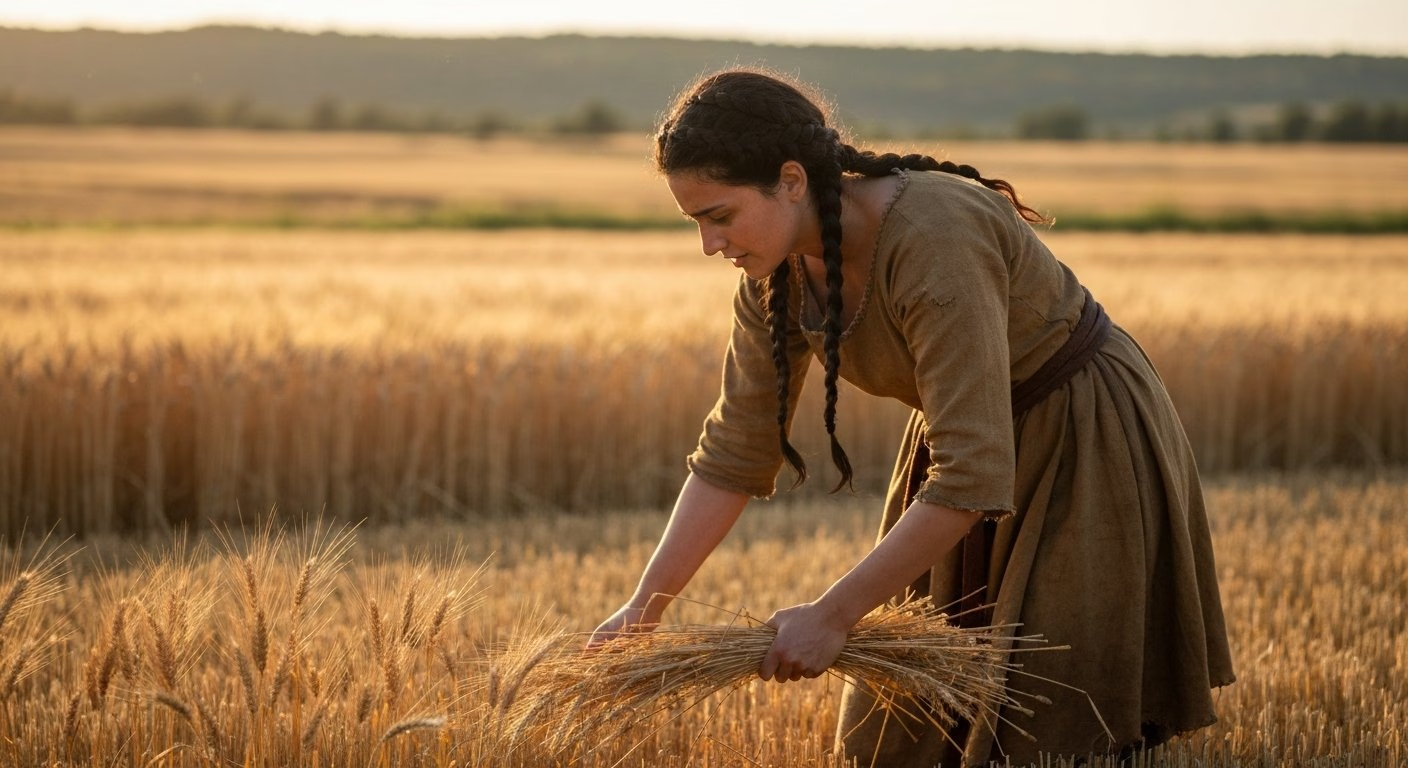
The barley harvest was the first of the annual crops to be gathered. It coincided with Passover and the Feast of Firstfruits. This is critical. Barley was the food of the poor, the humble grain. By arriving at this time, Naomi and Ruth are stepping into a season of “first things.” It’s the initial crack of light after a long, dark night. [INTERNAL_LINK: spiritual discipline] helps us recognize these subtle shifts in our own lives—when the “barley” of God’s grace starts to appear even when we feel we have nothing left to offer.
Consider the data of the text. Ruth 2:23 tells us that Ruth “stayed close to the young women of Boaz, gleaning until the end of the barley and wheat harvests.” This period covers roughly seven weeks. In the Jewish calendar, this is the “Counting of the Omer,” the bridge between Passover and Pentecost (Shavuot). This is not a weekend trip; this is a season of sustained labor and sustained grace. The writer is showing us that redemption isn’t a lightning bolt; it’s a harvest. It takes time to move from the “bitterness” Naomi felt to the “fullness” she would eventually experience.
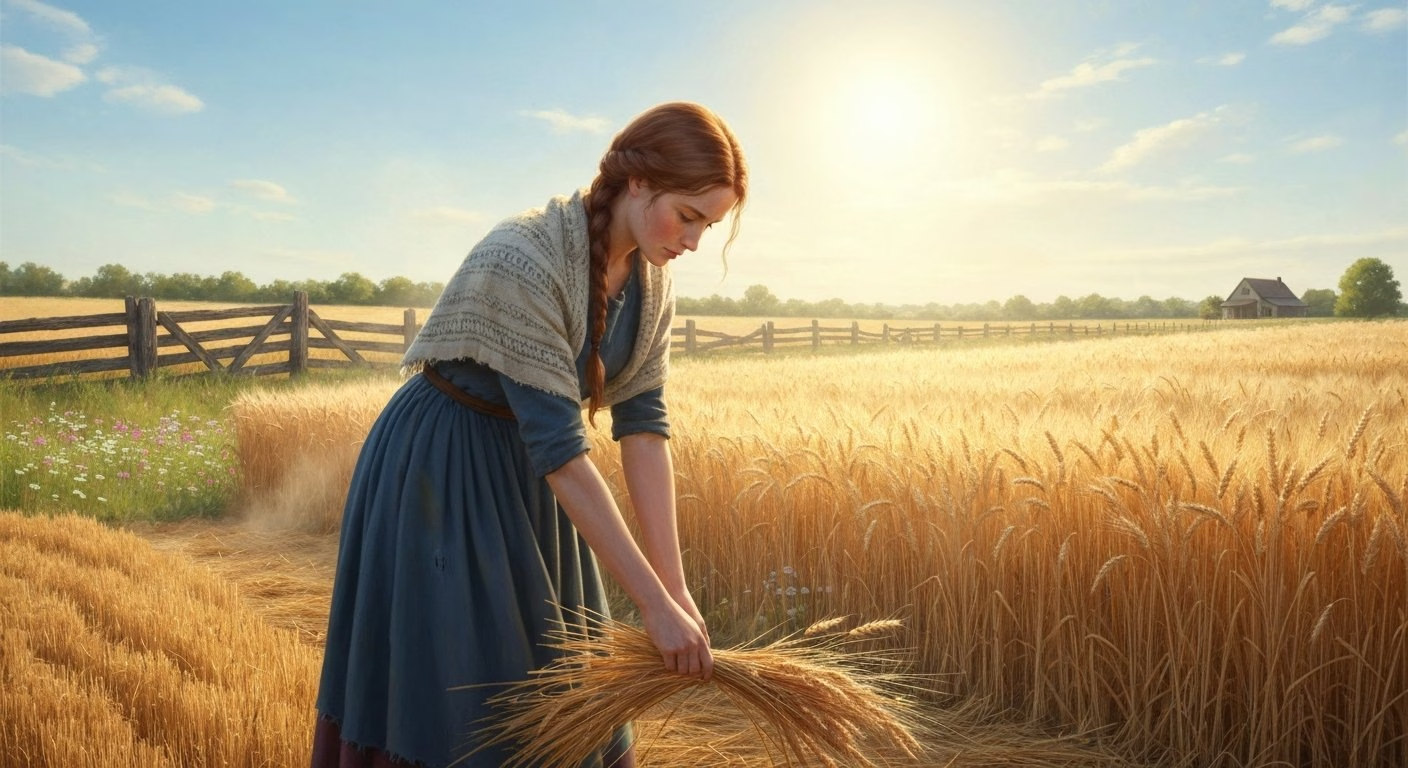
- The Barley Harvest: Represents the initial provision and the Feast of Firstfruits.
- The Wheat Harvest: Represents the completion of the grain harvest and the Feast of Weeks (Pentecost).
- The Gleaning: The law of the land that allowed the poor to survive on the margins of the abundance.
- The Kinsman Redeemer: Boaz, who provides protection and eventually, restoration.
Why the Duration of Harvest Time in the Bible Matters
Why does the author mention that Ruth gleaned from the beginning of the barley harvest until the end of the wheat harvest? Because the harvest time in the Bible is a school of formation. If Ruth had only stayed for a week, she would have missed the deepening relationship with Boaz. If she had left after the barley was in, she would have missed the greater abundance of the wheat.
In our modern, high-speed secular culture, we want the “microwave” version of redemption. We want to pray a prayer and have our trauma evaporated by Tuesday. But God works in seasons. He works through the grit of the field. Ruth had to get her hands dirty. She had to endure the heat of the sun. She had to “stay close” to the source of provision. This is what it looks like to metabolize grace. It’s a process of unlearning the scarcity of Moab and learning the abundance of Bethlehem. [EXTERNAL_LINK: Bible Project, Book of Ruth] provides an excellent visual breakdown of how this literary structure emphasizes the reversal of Naomi’s fortunes.
Questions for Reflection
What does this article explain?
It explains the biblical meaning of Harvest Time in the Bible: From Death to New Life and its significance for Christian faith today.
Why should Christians study the biblical feasts?
The feasts remember God’s salvation and presence, and Christians discern their fulfillment through Jesus Christ.

Why Do I Keep Having Nightmares? Find Spiritual Peace
Why Do I Keep Having Nightmares? Find Spiritual Peace When we ask ourselves, why do I keep having nightmares?, we often search for answers in

Sukkot Meaning for Christians: God’s Dwelling
Sukkot Meaning for Christians: God’s Dwelling In a world often defined by digital ephemera and the transient nature of our online presences, the Sukkot meaning

How Christians Celebrate Sukkot Today: A Modern Look
How Christians Celebrate Sukkot Today: A Modern Look In a world often defined by the fleeting and the ephemeral, **how Christians celebrate Sukkot today** offers
How Jesus Celebrated the Feast of Tabernacles
How Jesus Celebrated the Feast of Tabernacles How Jesus Celebrated the Feast of Tabernacles (Sukkot) offers a profound lens through which to consider our own

The Church Is Born: Threshing Floor Faith & Covenant Wings
The Church Is Born: Threshing Floor Faith & Covenant Wings Imagine the sheer audacity of standing before a powerful figure, a landowner, a master

Security Before the Settlement: Profound Promise Between Ruth and Boaz
Security Before the Settlement: Profound Promise Between Ruth and Boaz How often do we find ourselves anxiously awaiting the final gavel, the signed document,