Rediscovering the Rhythm: Why Christians Are Returning to the Jewish Feasts of the Bible
When I talk to pastors across the country, I am struck by how many are asking why more Christians are drawn to celebrate the Jewish feasts of the Bible in an age that feels increasingly unmoored from any sense of sacred time. We live in a culture that is perpetually “on,” a digital landscape where the news cycle never sleeps and the distinction between Tuesday afternoon and Sunday morning has been flattened by the relentless demands of the market and the screen. There is a profound sense of dislocation in the modern soul, a feeling that we are humming a tune but have forgotten the lyrics. For many believers, the discovery of the biblical calendar isn’t a move toward legalism, but a desperate reach for a life that is synchronized with the heartbeat of the Creator rather than the erratic pulse of a social media feed.
I remember sitting on a porch in rural Mississippi, listening to the cicadas mark the transition from afternoon to evening. There is a weight to that kind of time—a heavy, purposeful movement that suggests the world is going somewhere. Yet, for many of us in the pews, our spiritual lives feel static or, worse, cyclical in a way that leads nowhere. We go through the motions of our modern holidays, often feeling more exhausted by the consumerism than refreshed by the Christology. This is where the Jewish feasts of the Bible offer something more than just historical curiosity; they offer a map of the soul’s journey toward God.
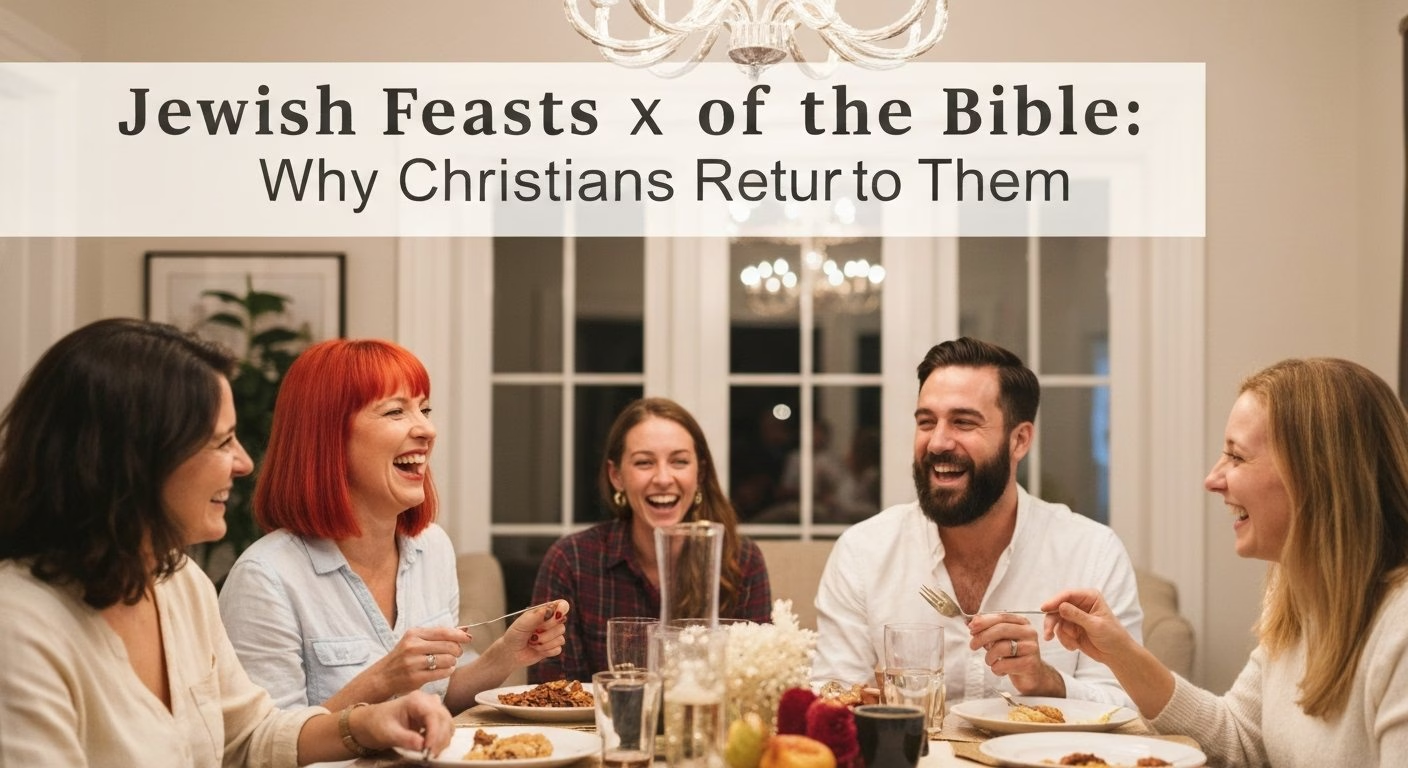
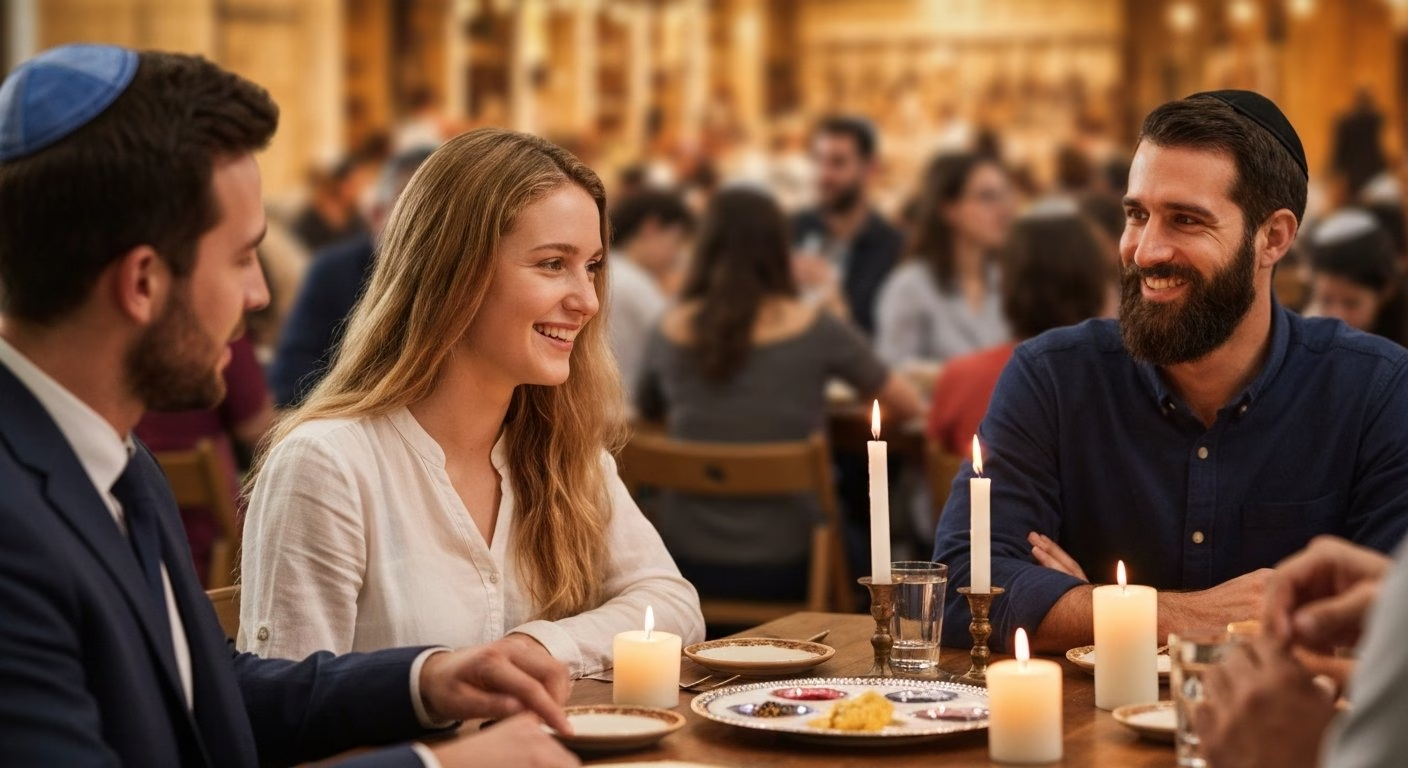
[IMAGE: A traditional Seder plate illustrating the Jewish feasts of the Bible]
The Fragility of Our Modern Clock
The problem we face is not just a lack of “tradition,” but a profound misunderstanding of what time is for. In our current moment, time is something to be managed, billed, or killed. We treat the calendar like a spreadsheet rather than a sanctuary. This creates a kind of spiritual vertigo. We have been conditioned to believe that history is just “one damn thing after another,” as the old saying goes, with no overarching melody. When we lose the rhythm of the biblical year, we lose our place in the story of redemption.
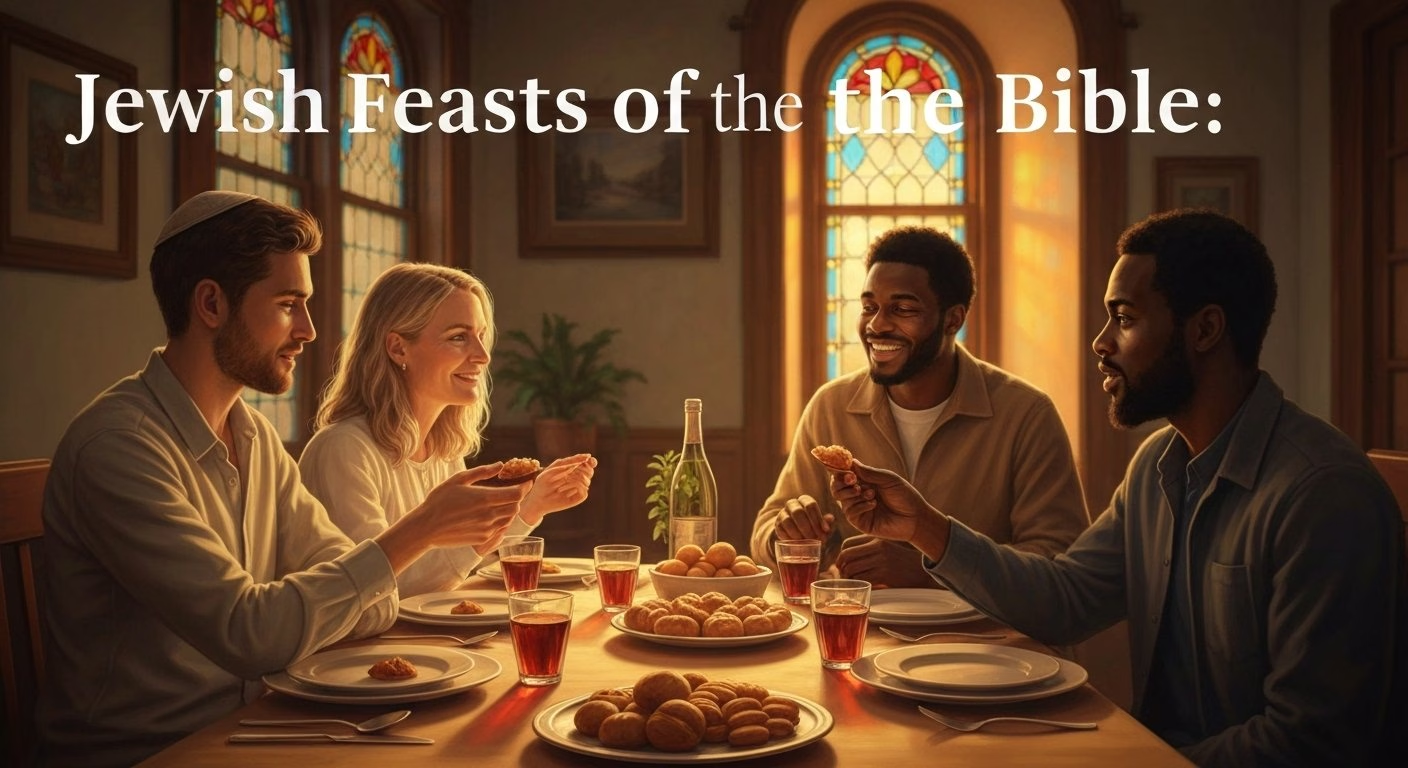
Disillusionment with the hollowed-out secular calendar is driving a quiet revolution in evangelical and mainline circles alike. People are tired of a faith that only seems to matter for an hour on Sunday morning. They are looking for a way to inhabit the Gospel with their whole bodies, their whole families, and their whole year. They are realizing that if we do not intentionally inhabit God’s time, we will be forced to inhabit the time of the huckster and the politician. And as we have seen, that time is marked by anxiety and division rather than peace and presence.
The Eternal Harmony of the Jewish Feasts of the Bible

If you go back to the very beginning, to the opening stanzas of Genesis, you see that time was never intended to be a neutral vacuum. When God created the stars, the sun, and the moon, He did so to mark “seasons”—or in the Hebrew, moadim, which means “appointed times” or “sacred rehearsals.” The Jewish feasts of the Bible were woven into the fabric of the cosmos before the first man ever drew breath. God set the harmony according to His plan, ensuring that the physical world would always point back to the spiritual reality of His presence.
This is why the “amazing discovery” so many believers are making today feels less like learning something new and more like remembering something they didn’t know they’d forgotten. The biblical feasts—Passover, Shavuot, Sukkot, and others—are not merely relics of an ancient Near Eastern culture. They are the scaffolding of God’s redemptive work. Consider the following reasons why these rhythms remain vital:
Questions for Reflection
What does this article explain?
It explains the biblical meaning of Jewish Feasts of the Bible: Why Christians Return to Them and its significance for Christian faith today.
Why should Christians study the biblical feasts?
The feasts remember God’s salvation and presence, and Christians discern their fulfillment through Jesus Christ.

Why Do I Keep Having Nightmares? Find Spiritual Peace
Why Do I Keep Having Nightmares? Find Spiritual Peace When we ask ourselves, why do I keep having nightmares?, we often search for answers in
Sukkot Meaning for Christians: God’s Dwelling
Sukkot Meaning for Christians: God’s Dwelling In a world often defined by digital ephemera and the transient nature of our online presences, the Sukkot meaning
How Christians Celebrate Sukkot Today: A Modern Look
How Christians Celebrate Sukkot Today: A Modern Look In a world often defined by the fleeting and the ephemeral, **how Christians celebrate Sukkot today** offers
How Jesus Celebrated the Feast of Tabernacles
How Jesus Celebrated the Feast of Tabernacles How Jesus Celebrated the Feast of Tabernacles (Sukkot) offers a profound lens through which to consider our own
The Church Is Born: Threshing Floor Faith & Covenant Wings
The Church Is Born: Threshing Floor Faith & Covenant Wings Imagine the sheer audacity of standing before a powerful figure, a landowner, a master

Security Before the Settlement: Profound Promise Between Ruth and Boaz
Security Before the Settlement: Profound Promise Between Ruth and Boaz How often do we find ourselves anxiously awaiting the final gavel, the signed document,