The Hunger of the Wilderness: Why Matthew 4 is the Necessary Map for Lent

The Aesthetic of the Ash
I remember a deacon in a small, wood-paneled church back in Mississippi who once told me, with a straight face and a glimmer of self-satisfaction, that he was giving up “negativity” for Lent. It sounded lovely, in a Hallmark sort of way, until one realized he had spent the better part of the previous year making sure the young pastor’s life was a vibrant, living purgatory. We have a tendency, especially those of us with a penchant for the liturgical or the high-minded, to turn the Lenten season into a form of performance art. We want a wilderness that looks good on a curated Instagram feed—a half-empty espresso cup, a tattered copy of Graham Greene, and a smudge of ash that somehow highlights our cheekbones. We want the gravitas of sacrifice without the actual ache of it.
But the Spirit does not lead us into a branding exercise; the Spirit leads us into the void. This is why, every year when the air in Nashville begins its annual tradition of lying to us about the arrival of spring, I find myself returning to the fourth chapter of Matthew. It is the account of the temptation of Jesus, and it remains the most terrifyingly relevant map for our current cultural moment. It begins not with a spiritual high, but with the physiological reality of the desert. After forty days, the text says, Jesus was famished. That is a polite way of saying His body was beginning to consume itself. He was at the end of Himself. And that is exactly where the huckster arrives.
The Currency of the Huckster
The temptation of Christ is often taught as a lesson in how to memorize Scripture to defeat the Devil, as if the Bible were a book of magic spells. But the conflict in Matthew 4 is deeper than a proof-texting duel. It is a battle over identity. The Devil’s opening gambit—”If you are the Son of God”—is designed to suggest that the Father’s love is conditional upon the Son’s comfort. It is the primordial hiss that suggests we are only what we consume, what we control, or what we can prove by leaping from the temple heights to the applause of the crowd.

Why Do I Keep Having Nightmares? Find Spiritual Peace
Why Do I Keep Having Nightmares? Find Spiritual Peace When we ask ourselves, why do I keep having nightmares?, we often search for answers in
Sukkot Meaning for Christians: God’s Dwelling
Sukkot Meaning for Christians: God’s Dwelling In a world often defined by digital ephemera and the transient nature of our online presences, the Sukkot meaning
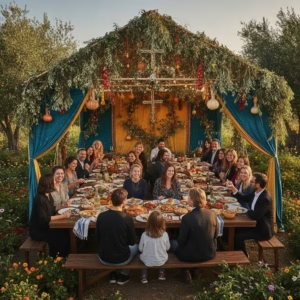
How Christians Celebrate Sukkot Today: A Modern Look
How Christians Celebrate Sukkot Today: A Modern Look In a world often defined by the fleeting and the ephemeral, **how Christians celebrate Sukkot today** offers
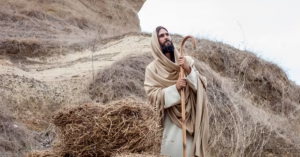
How Jesus Celebrated the Feast of Tabernacles
How Jesus Celebrated the Feast of Tabernacles How Jesus Celebrated the Feast of Tabernacles (Sukkot) offers a profound lens through which to consider our own
The Church Is Born: Threshing Floor Faith & Covenant Wings
The Church Is Born: Threshing Floor Faith & Covenant Wings Imagine the sheer audacity of standing before a powerful figure, a landowner, a master

Security Before the Settlement: Profound Promise Between Ruth and Boaz
Security Before the Settlement: Profound Promise Between Ruth and Boaz How often do we find ourselves anxiously awaiting the final gavel, the signed document,