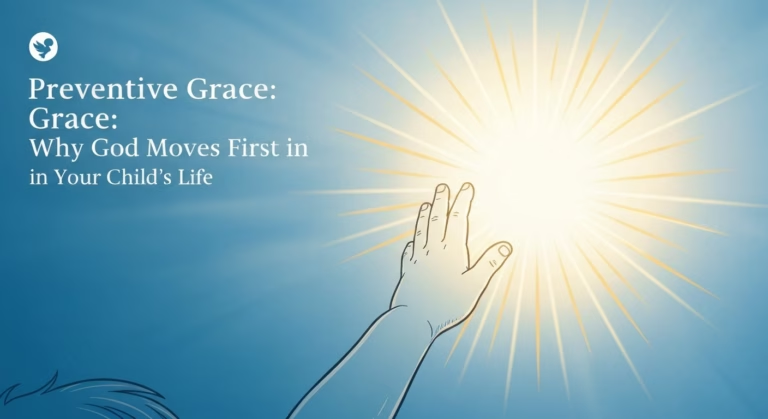
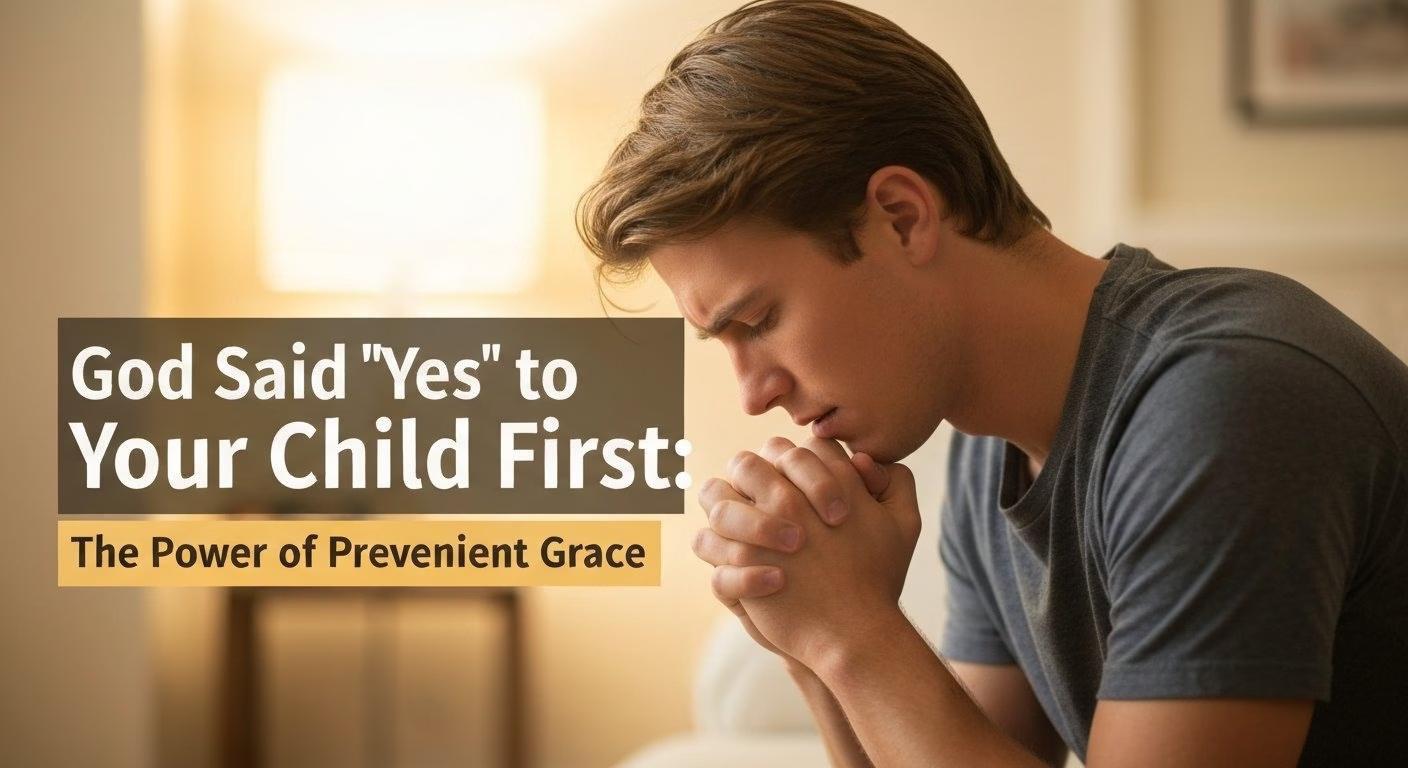
God Said “Yes” to Your Child First: The Power of Prevenient Grace
I remember standing in the back of a sweltering sanctuary in the deep humidity of a Mississippi June, watching a young father lean down to his six-year-old daughter with an intensity usually reserved for high-stakes depositions. He was vetting her. He wanted to be absolutely certain that her “decision for Christ” was authentic, that she understood the nuances of propitiation, and that she wasn’t just looking for a reason to get her hair wet in the baptistery. He was waiting for her “yes” with a nervous twitch, as if the entire architecture of the cosmos depended on the cognitive processing power of a first-grader.
We do this because we are a people haunted by the ghost of the Enlightenment, convinced that nothing is real unless it is a conscious, autonomous choice made by a fully informed consumer. We treat the Gospel like a software licensing agreement—scroll to the bottom, click “accept,” and only then does the program begin to run. We have turned the foyer of the Kingdom into a DMV waiting room where we sit, tapping our feet, waiting for our children to finally produce the right identification so they can be “official.”
But the tragedy of this moment is that we have forgotten the rhythm of the Father. We have replaced the covenant with a contract, and in doing so, we’ve placed a burden on our children that they were never meant to carry. We are waiting for a “yes” from a child, forgetting that God has already shouted “YES” over them from the height of a Roman cross and the depth of an empty tomb.

The Tyranny of the Decision
The theological term for this proactive, “already-there” love is prevenient grace. It is the grace that goes before. It is the light that is already shining in the room before you wake up to notice it. In our modern evangelical landscape, we often suffer from a kind of functional Pelagianism—the idea that we initiate the relationship and God merely responds to our RSVP. We view the soul of a child as a blank slate or, worse, a hostile territory that we must conquer with the right “gospel presentation.”
However, the witness of Scripture suggests something far more haunting and far more beautiful. When the angel Gabriel speaks to Zechariah, he doesn’t say that John the Baptist will eventually “make a decision” for the Lord; he says John will be “filled with the Holy Spirit, even from his mother’s womb.” When God calls Jeremiah, He doesn’t wait for a bar mitzvah; He says, “Before I formed you in the womb I knew you.”

There is a data point in the heart of God that precedes human consciousness. To believe in prevenient grace is to believe that God is the aggressor in the relationship. He is the Hound of Heaven, as Francis Thompson put it, pursuing us down the arches of the years. This isn’t a denial of the need for a response; it is an affirmation of who starts the conversation. Our children do not find God as though He were a set of misplaced car keys; they are found by a Shepherd who was looking for them before they even knew they were lost.
The Gospel is Not a Self-Checkout Kiosk
The danger of our “decision-only” culture is that it breeds a peculiar kind of cynicism. If the child’s “yes” is the mechanical trigger for God’s love, then that child will grow up wondering if their “yes” was sincere enough, loud enough, or understood well enough. They become hucksters of their own sincerity. They spend their adolescence “rededicating” their lives every summer at youth camp, frantically trying to jump-start a motor that was never theirs to crank in the first place.
When we look at the cultural decay around us, we see a world obsessed with self-creation. We are told we can be whoever we want to be, provided we make the right choices and curate the right brand. If we bring that same energy into the church, we aren’t offering a refuge from the world; we are just offering a religious version of the same exhaustion. We are telling our children that they are orphans until they can prove they deserve to be sons and daughters.

Why Do I Keep Having Nightmares? Find Spiritual Peace
Why Do I Keep Having Nightmares? Find Spiritual Peace When we ask ourselves, why do I keep having nightmares?, we often search for answers in

Sukkot Meaning for Christians: God’s Dwelling
Sukkot Meaning for Christians: God’s Dwelling In a world often defined by digital ephemera and the transient nature of our online presences, the Sukkot meaning
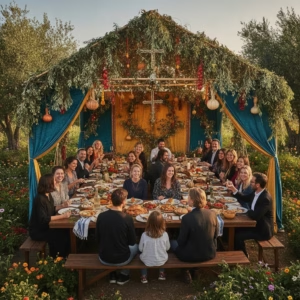
How Christians Celebrate Sukkot Today: A Modern Look
How Christians Celebrate Sukkot Today: A Modern Look In a world often defined by the fleeting and the ephemeral, **how Christians celebrate Sukkot today** offers
How Jesus Celebrated the Feast of Tabernacles
How Jesus Celebrated the Feast of Tabernacles How Jesus Celebrated the Feast of Tabernacles (Sukkot) offers a profound lens through which to consider our own

The Church Is Born: Threshing Floor Faith & Covenant Wings
The Church Is Born: Threshing Floor Faith & Covenant Wings Imagine the sheer audacity of standing before a powerful figure, a landowner, a master

Security Before the Settlement: Profound Promise Between Ruth and Boaz
Security Before the Settlement: Profound Promise Between Ruth and Boaz How often do we find ourselves anxiously awaiting the final gavel, the signed document,