Lenten Devotion Through Bach: The Architecture of Solitude
Is it possible that the most profound expression of Lenten devotion through Bach is found not in the communal echoes of a vaulted cathedral, but in the sterile, airless confines of a 1955 recording studio? There is a peculiar phenomenon in Glenn Gould’s debut recording of the Goldberg Variations, a ratio between the pianist and the silent audience that feels strictly 1:1. In the spiritual life, we often suffer from a crowded horizontal plane; we are too conscious of the “audience,” the opinions of our peers, and the performative nature of our piety. We treat our religious observances as a public exhibition, a curated display of penitence that seeks validation from the very world we claim to be renouncing. Gould offers a radical, if unintentional, correction to this modern malaise. When Gould performs, he isn’t playing for us; he is inhabiting a private laboratory of the mind. Even his humming—that messy, breathing intrusion into the pristine geometry of the music—is the sound of a man so deeply entwined with his subject that the rest of the world has effectively ceased to exist.
During my years as an artist/pastor, I have frequently observed that the greatest art does not beckon the viewer with a desperate plea for attention; rather, it exists in a state of self-contained necessity. Bach’s music, perhaps more than any other, demands this structural integrity. It is not “about” something; it is something. It is a series of mathematical and theological propositions that exist independently of our appreciation. In the context of Lenten devotion through Bach, we find a mirror for the secret place of prayer. Like Gould, we must become so consumed by the “Divine Counterpoint” that we become oblivious to the presence of any other. If our lives “hum” with the residue of our struggle, let it be because we are so close to the Source that the distinction between the seeker and the Found begins to dissolve. This is the structural logic of the desert: a stripping away of the superfluous until only the essential dialogue remains.

The Structural Logic of Glenn Gould’s Private Laboratory
To understand Gould’s Bach is to understand the difference between sentiment and structure. In the post-war era, the prevailing style of Bach performance often leaned toward the “Stokowski-fication” of the Baroque—a lush, orchestral sentimentality that blurred the lines of the counterpoint in favor of a vague, emotional wash. Gould’s 1955 intervention was an act of architectural restoration. He treated the Goldberg Variations not as a series of charming vignettes, but as a unified, rigorous interrogation of a single theme. This is the essence of Lenten devotion through Bach: the recognition that true spiritual progress is not a matter of accumulating new experiences, but of exploring the infinite depths of an established truth.
Gould’s isolation was not merely psychological; it was a physical requirement for the clarity he sought. By retreating into the studio, he removed the “noise” of the concert hall—the coughs, the applause, the reciprocal energy that often tempts a performer toward kitsch. In the 1:1 ratio, the performer is accountable only to the score and the Creator. This provides us with a profound Lenten lesson regarding the nature of worship. Consider the following structural requirements for such an interior solitude:
- The Renunciation of the Gaze: Turning the eyes away from the “horizontal” audience of social approval.
- The Acceptance of the Residual: Understanding that our “humming”—our human imperfections—is a natural byproduct of intense proximity to the Divine.
- The Precision of the Mind: Approaching the “Aria” of our faith with the rigor of an artisan rather than the vagueness of a dreamer.
- The Laboratory Mindset: Viewing the season of Lent as a period of testing and refinement in a controlled, private environment.
When we apply this Gouldian solitude to our spiritual practices, we find that the “pedal” of our excuses is gradually released. We are no longer hiding our mistakes in a wash of resonance. We are standing in the stark light of the counterpoint, where every note—and every action—is held accountable to the overarching structure of the whole.
Sir András Schiff and the Fast of the Sustaining Pedal
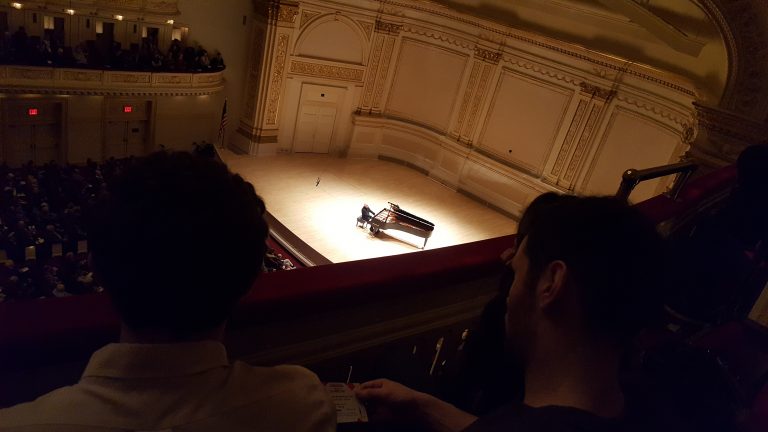

If Gould represents the interior solitude of Lenten devotion through Bach, Sir András Schiff represents the external discipline of purity. Years ago, sitting with my family at the Bachfest Leipzig, I witnessed Schiff approach the piano with that rhythmic, purposeful stride that has become his trademark. He did not merely walk onto the stage; he entered into a historical continuity. The Thomaskirche, where Bach himself served as Cantor, provides a terrifyingly precise acoustic. There is no room for the “blur” that characterizes so much of modern life. Schiff’s most striking attribute in these performances is his refusal of the sustaining pedal.