The Grafted Life: Why Baptism Ends the Search for Belonging
We live in an era defined by the “browsing” soul. We treat our local congregations with the same non-committal curiosity we bring to a Netflix queue or a Sunday afternoon trip to the shopping mall, perpetually scanning for a better deal, a more resonant aesthetic, or a more curated experience of the divine. We have turned the “search for a church home” into a permanent lifestyle, a kind of spiritual consumerism that leaves us perpetually exhausted and fundamentally alone. We want the benefits of the garden without the constraint of the soil.
The Violence of the Graft
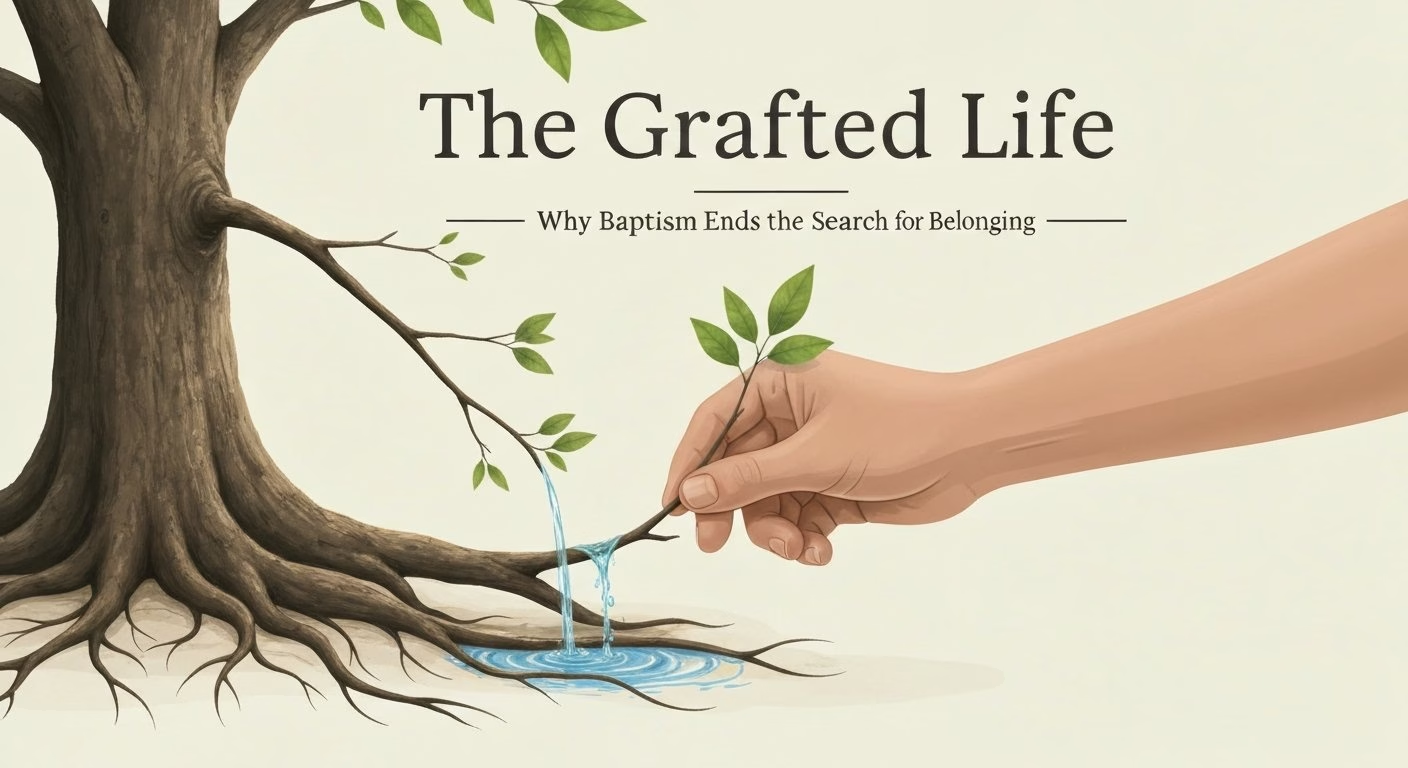
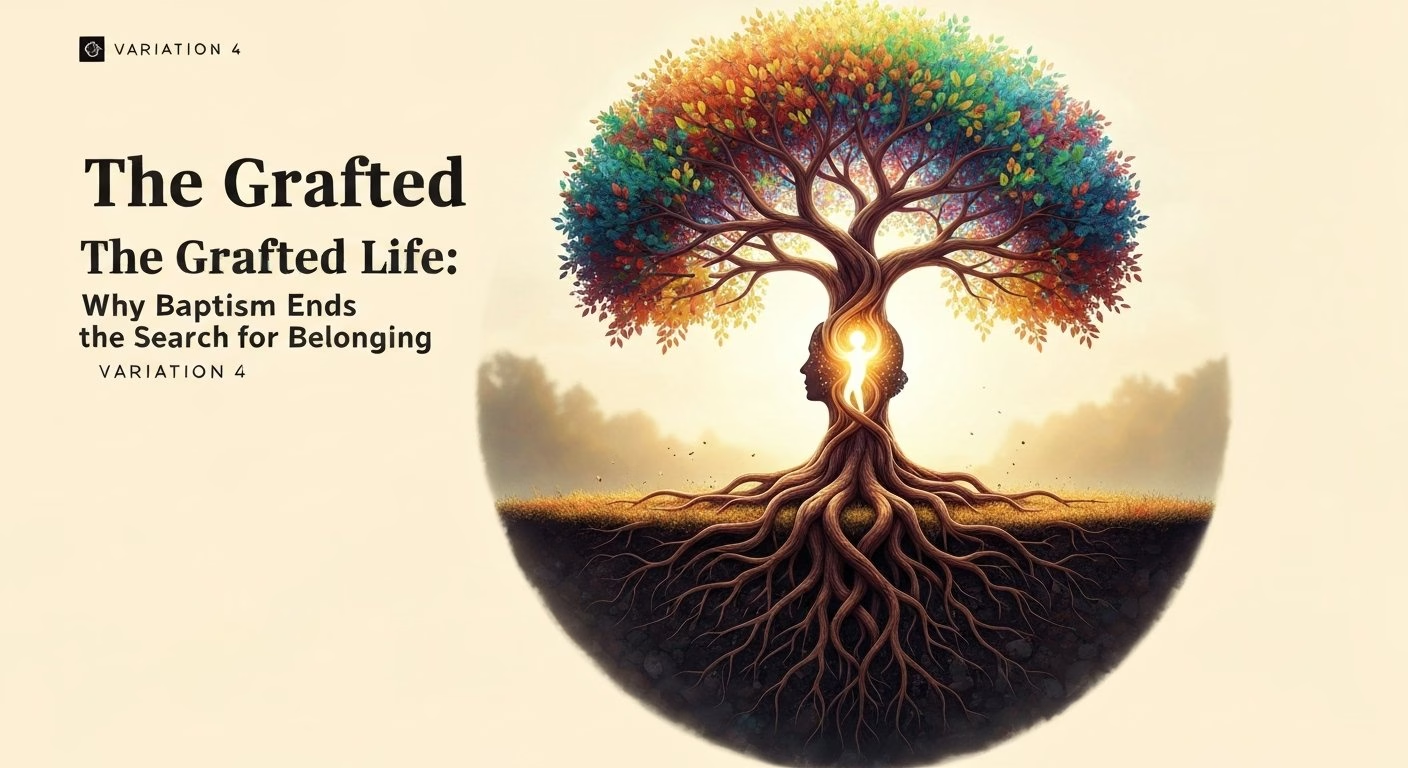
I recall watching a horticulturalist in the Appalachian foothills work with a fruit tree, carefully slicing into a healthy stock to insert a foreign branch. To the untrained eye, it looked like a wound. It looked like an intrusion. But that gardener knew what we often forget: a branch cannot decide to flourish on its own terms; it must be bound to something with deeper roots and more persistent sap. Without the graft, the branch is just kindling waiting for a season of drought.
In John 15, Jesus speaks of the Vine and the branches not as a metaphor for personal self-improvement, but as a description of ontological reality. We do not “attach” ourselves to Christ through the sheer force of our own sincerity or the vibrancy of our spiritual feelings. We are grafted. And for the church, baptism is that official moment of grafting. It is the point where the “shopping” stops and the belonging begins. It is a covenantal attachment that says you are no longer a free agent in the spiritual marketplace. You are part of the organism.
Beyond the Temporary Ceremony
The tragedy of our modern moment is that we have reduced baptism to a sentimental photo-op or a temporary rite of passage, something akin to a spiritual graduation ceremony that carries no further obligation. But a graft is not a temporary arrangement. You do not graft a branch for a weekend; you graft it so that the very life-blood of the tree becomes the life-blood of the limb. When a parent brings a child to the waters, they aren’t just performing a beautiful tradition; they are placing that child into the life-giving flow of the body of Christ. They are declaring that where this child is planted will determine whether they wither or bloom.
The evidence of this power isn’t found in the emotional high of the service, but in the long-term resilience of the believer. Those who view their baptism as a permanent “attachment” rather than a fleeting “event” find they have resources to draw upon when the culture turns cynical or the heart grows cold. They are connected to a source of grace that does not depend on their own psychological stamina. The sap flows even when the branch feels dormant.

Why Do I Keep Having Nightmares? Find Spiritual Peace
Why Do I Keep Having Nightmares? Find Spiritual Peace When we ask ourselves, why do I keep having nightmares?, we often search for answers in
Sukkot Meaning for Christians: God’s Dwelling
Sukkot Meaning for Christians: God’s Dwelling In a world often defined by digital ephemera and the transient nature of our online presences, the Sukkot meaning
How Christians Celebrate Sukkot Today: A Modern Look
How Christians Celebrate Sukkot Today: A Modern Look In a world often defined by the fleeting and the ephemeral, **how Christians celebrate Sukkot today** offers
How Jesus Celebrated the Feast of Tabernacles
How Jesus Celebrated the Feast of Tabernacles How Jesus Celebrated the Feast of Tabernacles (Sukkot) offers a profound lens through which to consider our own
The Church Is Born: Threshing Floor Faith & Covenant Wings
The Church Is Born: Threshing Floor Faith & Covenant Wings Imagine the sheer audacity of standing before a powerful figure, a landowner, a master

Security Before the Settlement: Profound Promise Between Ruth and Boaz
Security Before the Settlement: Profound Promise Between Ruth and Boaz How often do we find ourselves anxiously awaiting the final gavel, the signed document,